


Dig deeper with us.
This is the second of a multi-part series on the Sisson Mine project and the restarting of New Brunswick’s mining sector. If this story matters to you, please share it. Every share helps shine a light on issues that deserve attention and keeps independent reporting strong on Canada’s East Coast.
The Sisson Mine is projected to supply as much as 5.4 percent of global tungsten supply and produce roughly 2,200 tonnes of molybdenite.
Both minerals underpin industrial machinery, aerospace and defence systems, and a range of electronics and clean-energy technologies.
With about 500 construction jobs and 200-300 operating jobs on offer, the mine appears at first glance to offer value to Canada’s critical minerals portfolio and to New Brunswick’s labour market.
Why, then, does a project with such apparent economic and strategic promise face persistent criticism?
Opposition comes from a range of sources: environmental groups, nearby farmers and hunters, members of the Wolastoqey Nation Grand Council, fiscal conservatives, and a broad swath of New Brunswickers.
These challengers argue that a 145-hectare open-pit mine and a 751-hectare tailings and water-management complex at the headwaters of the Nashwaak River represent an environmental, social and economic risk more suited to the last century than to this one, even though the mine project has already passed provincial and federal environmental assessments.
Going Big
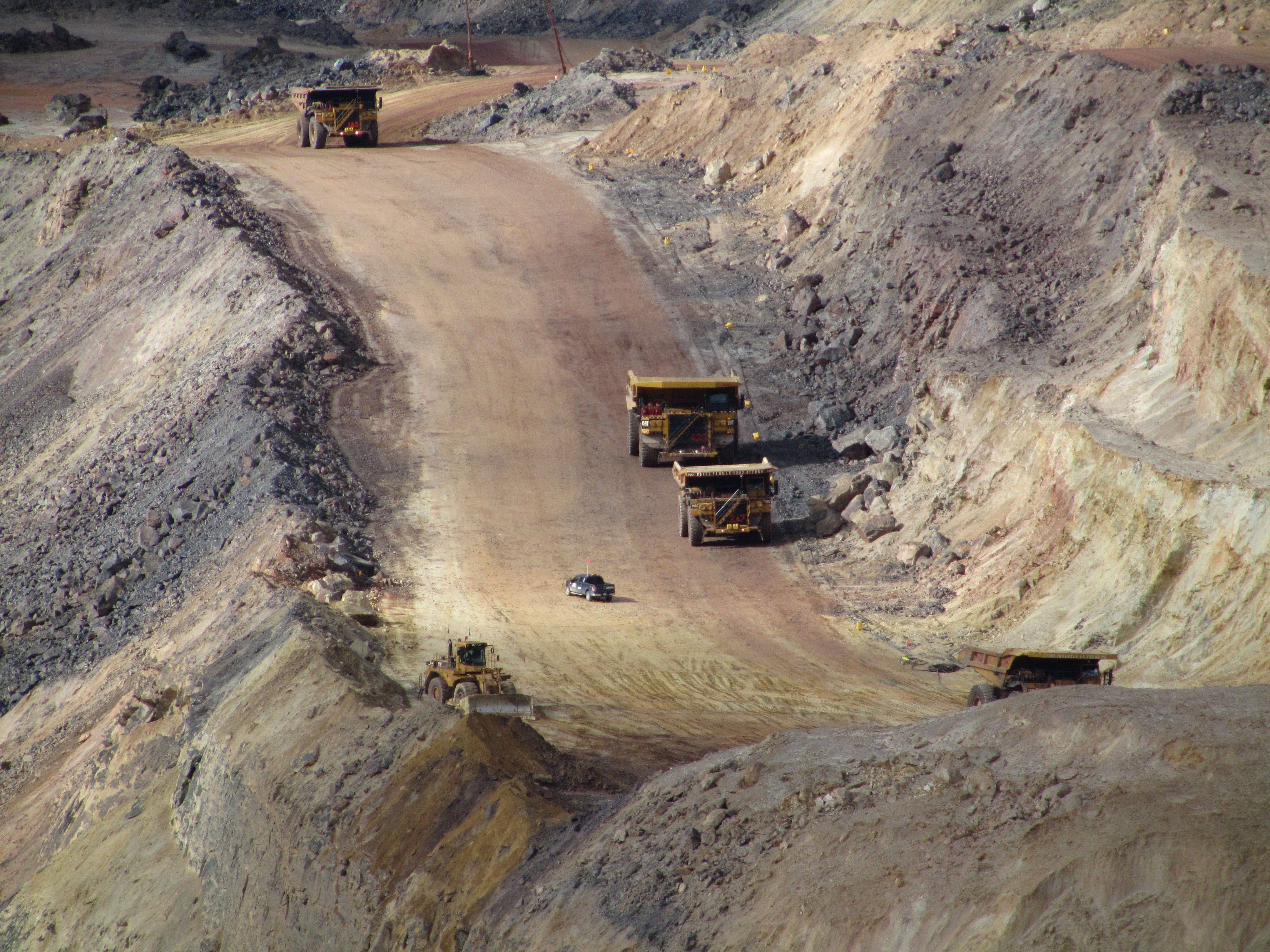
The Sisson Project would be one of the world’s largest open-pit mines, located in the upper Nashwaak watershed, on Wabanaki territory.
The Conservation Council of New Brunswick notes that if the proposed tailings site size estimate is correct, it would cover all of downtown Fredericton.
It is the tailings waste site that is of greatest concern.
A tailings storage facility (TSF) is an engineered containment basin where finely ground waste from mineral processing is deposited as slurry.
Solids settle over time, as water is stored, recycled, or treated. Tailings ponds, as they are commonly called, are usually enclosed by large earth-fill embankments and are monitored to prevent seepage and downstream contamination.
The Sisson Mine’s proposed tailings pond is enormous because the mine will produce a lot of waste rock.
The ore in the Sisson Mine has a very low ‘head grade,’ which means that tungsten comprises less than 0.07 per cent of the ore to be mined.
That means for every tonne mined, more than 99.9 per cent becomes waste rock, otherwise known as tailings.
Tailings behave like wet cement and can release harmful chemicals if not properly stored. Some tailings contain minerals that produce acid when exposed to air, known as potentially acid-generating or PAG tailings.
Stay Informed.
Want more deep dives like this? Subscribe to Side Walks and follow our continuing coverage of the issues shaping Atlantic Canada’s future.
Size Matters
The scale of Sisson’s proposed tailings pond is hard to picture.
It would measure roughly 3 to 3.5 km by 2.5 km – taking up an area roughly equivalent to the town of Sussex, or the downtown core of any of New Brunswick’s largest cities, Fredericton, Saint John or Moncton.
The tailings pond will also be deep.
Its depth is estimated to be about 80 metres, which is roughly equivalent to New Brunswick’s two tallest buildings – Moncton’s Assumption Place and Saint John’s Brunswick Square.
Sisson Mines Ltd estimates the project will create approximately 282 million tonnes (Mt) of tailings.
To get a sense of that volume, imagine all the space under the famous Rogers Centre dome in Toronto. The projected lifetime of Sisson Mine tailings would fill the Rogers Centre 110 times.
Scale will also dramatically affect its ecological impact.
A facility of this size cannot be built in the Upper Nashwaak watershed without eliminating existing water bodies.
The tailings pond construction will eliminate portions of Bird Brook and a tributary to West Branch Napadogan Brook, habitat for brook trout, slimy sculpin, American eel, and Atlantic salmon.
Some 1.74 ha of fish-bearing water bodies would be reclassified under Schedule 2 of the federal Metal and Diamond Mining Effluent Regulations, enabling their conversion into a tailings impoundment.
To offset this loss, Sisson Mines Ltd would have to implement a fish habitat compensation plan.
Beyond these immediate ecological risks lies a deeper structural issue with the project: its environmental assessment is outdated, and its responsible mining practices fall short of today’s standards and best practices.
Canada’s Sustainability Test
The Sisson Mine Project was reviewed under the 2012 Canadian Environmental Assessment Act (CEAA), which has since been superseded by the Impact Assessment Act (IAA) of 2019.
Sisson’s review is six years out of date and governed by legacy approvals rather than the more expansive standards introduced under the IAA.
Under the IAA, the Sisson project would face a markedly more stringent review. The IAA requires assessment of environmental effects as well as of social, economic, cultural and health impacts.
It mandates a clear, explicit evaluation of impacts on Indigenous rights protected under Section 35 of the Canadian Constitution and provides the directive that Indigenous governments must be engaged early, as partners in defining project scope, information needs and acceptable risk, rather than as consultees at the end of the process.
It also introduces a sustainability test and stronger requirements for cumulative-effects analysis, meaning forestry, energy exploration and regional land-use pressures surrounding Sisson would factor more directly into federal decision-making. In practical terms, the tailings design, long-term water treatment and plant emissions would all face deeper and more transparent scrutiny.
Sisson’s original CEAA review took three-and-a-half years. Undoubtedly, it would take years again to complete a new IAA, and today, a further benchmark sits alongside regulation: the Towards Sustainable Mining (TSM) standard.
Industry Standards Have Evolved
TSM is the Mining Association of Canada’s (MAC) flagship sustainability framework, created in 2003-04. It translates broad principles into measurable, independently verified performance at mine sites.
Participation in TSM is mandatory for MAC members, who report annually and undergo external audits every three years. The framework sets rigorous standards for tailings management, Indigenous and community engagement, safety, crisis planning, energy use, and biodiversity protection.
TSM has been adopted by mining associations in resource-dependent countries such as Finland, Norway, Australia, Brazil, Argentina, Botswana, the Philippines, Colombia, Spain, Panama, and Mongolia, and is widely regarded as a credible benchmark that goes beyond regulatory compliance.
Sisson Mines Ltd, and its owners, Northcliff Resources and Todd Minerals, are not MAC members and therefore are not bound by TSM standards.
Best Standards and Responsible Extraction
At the June 2025 G7 meeting in Alberta, member states signalled in the official communiqué that they “recognize that critical minerals markets should reflect the real costs of responsible extraction, processing, and trade of critical minerals, while ensuring labour standards, local consultation, anti-bribery and corruption measures and addressing negative externalities, including pollution and land degradation.”
The G7 also noted it would create a roadmap for standards-based critical minerals markets, developed in collaboration with industry, Indigenous Peoples, governments, and civil society.
This raises an obvious question: does the Sisson Mine Project align with the “standards-based” development the G7 now endorses? On the available evidence, it does not, although without a new federal assessment under the IAA, this remains untested.
The Sisson Mine Project won its provincial approval contingent on it meeting 40 conditions covering project timing, permitting, water and air-quality controls, extensive baseline studies, geotechnical and hydrogeological testing, tailings-dam safety, Indigenous and public engagement, financial securities for reclamation and long-term water treatment, and the company’s liability for catastrophic events.
A decade later, the company has not yet completed these requirements. In a November 25th CBC News story, New Brunswick Environment Minister Gilles LePage recently confirmed that, “the 40 are not complied [with] yet.”
Despite this, the project has recently drawn renewed government interest. Over the past decade, volatile mineral prices and China’s cheap supply of tungsten have suppressed investment interest.
In 2025, however, the U.S. gave the project roughly $20m (CAD) in Defence Production Act funding. Canada followed with another $8.2m through the Global Partners Initiative; funding intended to support an updated feasibility study and engineering design to inform a construction decision.
Nothing is assured. A new IAA would introduce new economic and technical hurdles. Critics of the project will assert that if the project cannot be redesigned or financed to meet modern standards, the real challenge lies in the underlying economics. A mine that depends on outdated practices to remain viable is, by definition, not viable.
This prompts a broader question: what would it take to make Sisson viable and genuinely advantageous for New Brunswick? Beyond extraction itself, are there upstream opportunities the project could create?
Coming Up Next on Side Walks: Sisson’s Economics and legacy costs.
Keep the Conversation Going.
You’ve just read the second story in our multi-part series on the Sisson Mine project and the future of mining in New Brunswick. If these issues matter to you, help us amplify them and share this story with others who want to understand the world from an Atlantic perspective. Every share brings more voices into the discussion and strengthens independent reporting on Canada’s East Coast.
Stroll Over to Side Walks For More Stories
Sisson Mine Story Series
Tungsten Puts New Brunswick Back on Ottawa’s Map: The Sisson Mine tungsten and molybdenum project in the Tobique River Valley gains momentum with Canadian and U.S. support, positioning New Brunswick in a global race for resource security.
Ideas
Why I Still Believe in Local Journalism: After decades in newsrooms, I’ve seen what trust and knowledge mean to a community and why Gina and I are building a model that values news creators, citizen engagement, and community knowledge
Side Walks Home Page
Catch up on all our stories at www.sidewalksmedia.ca.