


Dig deeper with us.
Welcome to the first of a multi-part series on the Sisson Mine project and issues of restarting New Brunswick’s mining sector. If this story matters to you, please share it. Every share helps shine a light on issues that deserve attention and keeps independent reporting strong on Canada’s East Coast.
When Prime Minister Carney unveiled the first tranche of Major Projects Office picks in September, New Brunswick was not on the list.
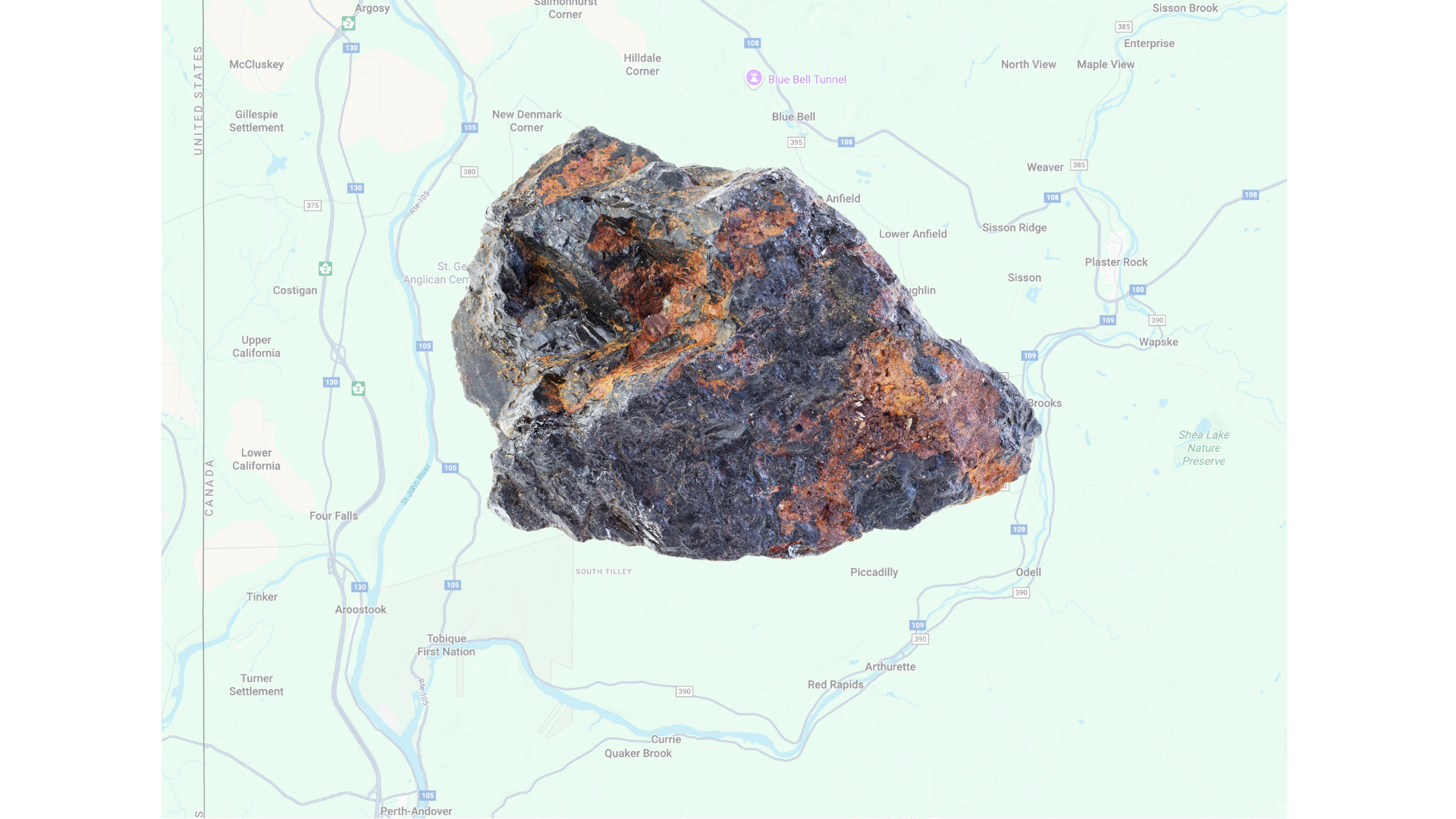
The picture changed on November 13 when the second tranche of major projects revealed that Sisson Mine, a proposed open-pit tungsten and molybdenum development in the Tobique River Valley north of Fredericton, is now under formal consideration.
And there is a great deal to consider.
The Sisson Mine project is being advanced by the Sisson Partnership, led by Northcliff Resources, with backing from New Zealand’s Todd Corporation, which owns an 11.5 per cent interest in the Partnership.
To qualify as a major project, the Sisson Mine has to show clear benefits to Canadians across the five criteria set out in the Building Canada Act, namely that it will:
strengthen Canada’s autonomy, resilience and security;
provide economic or other benefits to Canada;
have a high likelihood of successful execution;
advance the interests of Indigenous Peoples; and
contribute to clean growth and to Canada’s objectives with respect to climate change.
An Estimated Value
Sisson is flagged as significant: Based on numbers from the United States Geological Survey (USGS) Minerals Commodities Studies in 2020, the Sisson Mine could produce 4,400 metric tonnes per year (t/yr) of tungsten content. According to a 2025 USGS Minerals study, China produced 67,000 t/yr in 2024 from a total of 81,000 t/yr produced globally.
Back-of-the-envelope math indicates that Sisson Mine could represent as much as 5.4 per cent of the global tungsten production, or as much as 31 per cent of production outside of China.
Tungsten is a strategic mineral, essential for ultra-durable steel, advanced defence technologies and the high-precision tools that underpin modern industry and infrastructure.
The mine could also produce a potential 2,200 tonnes of molybdenite (MO) per year as a by-product.
Adding small amounts of molybdenum transforms ordinary steel into advanced grades of high-strength, low-alloy steels used in pipelines and structural beams, and corrosion-resistant stainless steels used in marine, chemical, and food-processing environments.
New Brunswick Premier Susan Holt is still crunching numbers of the potential royalties the project could bring in.
“We used to use the estimates of about $280 million of royalties, $245 million of tax revenue. Some of that is dependent on the price of the resource and the cost to development, so those are the initial estimates we’re working with,” she said in a November 13 Canadian Press story.
The proposed mine site is located in the traditional territory of the Wolastoqiyik, about 33 kilometres from Neqotkuk (Tobique First Nation), adjacent to Plaster Rock.
The project itself is hardly new.
Stay Informed.
Want more deep dives like this? Subscribe to Side Walks and follow the full series uncovering what’s shaping Atlantic Canada’s future.
A Long Investment
Exploration dates to the late 1970s and early 2000s. Northcliff Resources acquired the 14,140-hectare site around 2010 and completed a feasibility study in 2013.
Provincial approval followed in 2015, subject to 40 conditions spanning water protection, fish habitat, wetlands, archaeology and emergency planning.
Federal approval followed in 2017, with the Canadian Environmental Assessment Agency concluding that, aside from impacts on Indigenous land use and the potential effects of accidents or malfunctions, the Sisson Mine Project was unlikely to cause significant adverse environmental effects provided mitigation measures were implemented.
Then, between 2017 and 2024, not much happened: Northcliffe fundraised to keep the lights on and secured two construction deadline extensions as it continued its approvals and authorization processes.
Despite the slow pace, broader geopolitical undercurrents were also keeping the project alive.
In December 2022, the federal government released Canada’s Critical Minerals Strategy, providing a framework for federal support. In sum, the government’s approach to our critical minerals is that they offer a generational economic opportunity – delivering jobs, regional growth, supply-chain resilience and both the advancement of reconciliation and economic opportunities for Indigenous People in industries from clean energy to advanced manufacturing.
Geopolitical Tensions Arrive in the River Valley
Unsurprisingly, U.S. President Donald Trump’s trade war with Canada, the Canada/U.S. tariff merry-go-round and the president’s early inflammatory 51st State rhetoric has revivified Canada’s determination to increase critical mineral production and its domestic supply chain.
In April 2025, Prime Minister Mark Carney announced Canada’s First and Last Mile Fund to connect resource-rich regions and extraction or processing site to roads, rail, and ports to access global supply chains.
The Fund is expected to provide a funding envelope of $1.5 billion through the next four years to cover ‘first-mile’ and ‘last-mile’ links.
For Sisson, the logic is straightforward: critical minerals, federal backing, and a direct route to rail 15 km away in Napadogan, where a purpose-built storage yard is planned.
Funding wasn’t only coming from Canada’s federal government. President Trump’s new imposition of tariffs on Chinese imports saw China responding with export controls on critical minerals, tungsten amongst them.
The shock to the market resulted in the price of tungsten reaching a 12-year high in May 2025.
Despite President Trump and Chinese leader Xi Jinping agreeing to de-escalate trade tension in a summit in October, with Beijing agreeing to pause the implementation of some rare earth restrictions by one year, the threat is still in place, and tungsten is still subject to export controls.
As these global tensions were playing out, that same month in May 2025, the U.S. Department of Defense awarded Northcliff $15 million US ($20.7 m CDN) under the Defense Production Act to bolster North American tungsten production.
In August, Ottawa announced its own $8.2 million CDN investment through the Global Partnerships Initiative (GPI), funding intended to update the Sisson Mine feasibility study and engineering work to support a construction decision.
With new funding in the works and further consideration from the Major Projects office, the Sisson Mine Project looks and smells like a winner. Northcliff’s largest shareholder, the Todd Corporation of New Zealand, appears committed. The company has already spent some $70 million on resource, engineering, environmental and economic studies.
It makes one question: Who wouldn’t want the mine to go ahead?
As it happens, a great many people, and they have some compelling reasons for their opposition.
Coming Up Next on Side Walks: Sisson’s environmental impact, social licence, and the economic likelihood of development.
Keep the Conversation Going.
You’ve just read the first story in our multi-part series on the Sisson Mine project and the future of mining in New Brunswick. If these issues matter to you, help us amplify them and share this story with others who want to understand the world from an Atlantic perspective. Every share brings more voices into the discussion and strengthens independent reporting on Canada’s East Coast.
Stroll Over to Side Walks For More Stories
Place-based Development Story Series: East Coast Ambition Starts at Home
Trading Up: Ottawa’s new trade vision prioritizes domestic supply chains and the Maritimes must be ready to receive if it’s to be a full partner in Canada’s shifting federation
Convincing Homegrown Investors to Buy Local: Atlantic Canada’s Sandpiper Ventures and Mexico City show what happens when local capital backs local innovation – sustainable wealth with global reach
Ideas
Why I Still Believe in Local Journalism: After decades in newsrooms, I’ve seen what trust and knowledge mean to a community and why Gina and I are building a model that values news creators, citizen engagement, and community knowledge
Province on Fire: Northumberland County, home to New Brunswick’s forestry sector, is fighting back the flames.
Trade Reorientation Story Series: Saint John At The Crossroads
The Corner At The Centre of Things: Canada’s muscular new trade agenda is picking up speed; are the neighbourhoods in and around Simms Corner in West Saint John ready for what’s coming down the track?
Saint John’s Second Act: Global alliances, private investments, and cold chain innovations are transforming the Port of Saint John, but the real test will come inland.
Side Walks Home Page
Catch up on all our stories at www.sidewalksmedia.ca.