

Batteries don't create electricity; they shift it through time
The technology is transforming electricity grids around the world but understanding what batteries can and cannot do is key to understanding New Brunswick’s energy future.

Power up our understanding of the East Coast.
If this story piqued your interest, please share it. Every share helps spread knowledge about the ins and outs of local affairs and keeps independent reporting strong on Canada’s East Coast.
When I wrote recently about New Brunswick’s growing investment in wind power, the most common response from readers was simple: “What about batteries?”
It’s a fair question.
In the past few years, NB Power has locked in several hundred more megawatts (MW) of wind power, due online by 2027-28, to help meet federal rules that phase out coal by 2030 and cut fossil-fuel emissions sharply by 2035. As more electricity comes from wind, which, like solar, is a form of intermittent power, there will be more moments when generation doesn’t line up perfectly with demand. Sometimes there’s too much. Sometimes there isn’t enough. That’s the problem with intermittent power: unless you can find a way to contain it, it may not be available when you need it.
Which is why NB Power is now exploring battery energy storage systems (BESS). In late January, the utility issued a Request for Expressions of Interest, inviting proposals from private developers for battery systems totalling roughly 200 to 400 megawatt hours (MWh), of short-duration flexibility to manage wind and solar output, under a 15-year contract. A megawatt-hour measures energy delivered over time, which is not the same thing as raw capacity.
“We are committed to delivering cleaner energy without placing undue upward pressure on customer rates,” said Lori Clark, NB Power’s president and CEO. The utility intends to procure battery storage through long-term contracts with private developers, much as it does with wind farms.
So what does 200 MWh get you?
Unless you’re in the industry, or you really like reading about power generation, it is difficult to make sense of what 200 MWh really amounts to. So here is a thought exercise: Picture the entire NB Power grid shrunk down to the scale of a single-family home in New Brunswick.
In this imaginary version, the province becomes one house, and NB Power becomes the collection of things that keep that house powered. The point is not to make the provincial grid seem small. It is to keep the proportions the same while turning very large numbers into an understandable comparison.
Here’s how the scaling works. We take the ‘mega’ out of megawatts and megawatt-hours. A megawatt is one million watts, so scaling everything down by a factor of one million turns provincial-sized numbers into household-sized numbers. The relationship stays the same; only the scale changes.
On that scale, our imaginary home draws about 3 kilowatts at its peak (a bitter January night, with the heaters, oven and dryer all running) and uses about 13,557 kilowatt-hours of electricity each year.
In the single-home version, Point Lepreau becomes the house’s wood furnace, lit once and kept burning steadily. Mactaquac and the other hydro dams become a creek that slows in a dry summer. Belledune, the coal plant that must retire by 2030, becomes a generator out back. And the wind farms become a turbine in the yard.
Now imagine adding more turbines. Most of the time, more turbines are good: they provide cheaper power and create lower emissions. But wind doesn’t produce on command. Sometimes it’s calm. Sometimes it’s blowing too hard and turbines shut down. Sometimes the grid has more than it can absorb and generation gets curtailed. Solar has the same problem: it works beautifully at 2 p.m. but produces nothing at 6 p.m. on that cold January evening, when power demand peaks.
This is where the usefulness and limits of batteries becomes easier to understand. A battery can help when the house needs extra power for a short period, or when wind power arrives a few hours before it is needed, but if the house is short of supply for days, the battery has to be big enough to run nearly everything for those same days. These are very different problems.
Smoothing out short-term gaps
Batteries are useful for moving electricity through time, but they are not automatically a reasonable substitute for generation when supply is scarce.
Their first job of battery storage is called smoothing. When the wind produces more than the house needs, a battery stores the excess and releases it a few hours later, after sunset, when demand rises. This is the job NB Power’s proposed battery would actually do on the provincial grid: store excess electricity for a few hours so the system has more flexibility at the times demand is highest.
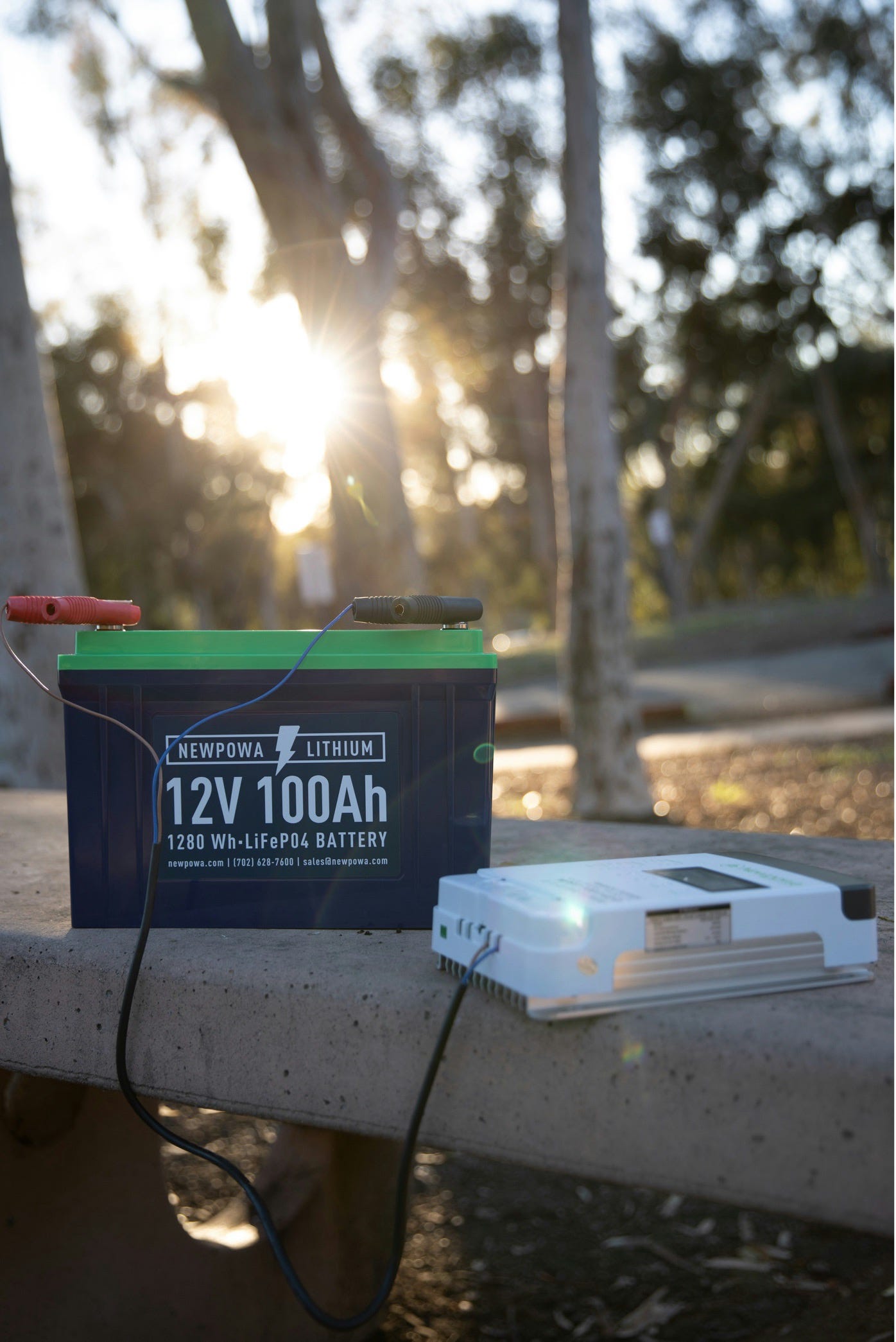
Scaled back down to our family home, that’s 200 to 400 watt-hours: roughly the size of a camping power pack sold at Canadian Tire for a few hundred dollars. If the power goes out, that little battery could keep your phone charged, the lights on and your refrigerator running for a few hours to smooth over a short outage. It is useful, but it is not the thing you would rely on to run the whole house through a major shortage.
That may not sound impressive at the household level, but on a modern electricity grid, shifting power by even a few hours has real value. It allows wind farms to keep generating when demand temporarily falls, reduces the need to start expensive backup generators, and helps maintain the power balance the grid requires. Utilities don’t buy batteries because they solve the problem of having too little generation for days at a time; they buy them because they solve the short-term balancing problem exceptionally well.
Storage for days is expensive
The second job is backup supply during a real shortage. That is a much bigger task. Let’s stay with the house analogy. Suppose the wind barely blows for four to five consecutive days, and the house still needs heat, lights, appliances and hot water. The question is no longer whether a battery can help through the evening peak; the question is whether it can replace the missing supply for days.
On this scale, a house would require roughly 154,000 to 192,000 watt-hours of storage, which is roughly the equivalent of 11-14 Tesla Powerwalls mounted floor to ceiling across a garage wall, at an installed cost of roughly $212,000 to $265,000.
Most homeowners wouldn’t spend that kind of money on batteries for an occasional multi-day shortage. They would almost certainly look for a less expensive form of backup power, such as a gas-fuelled generator, which retail for around $600-$1,300. The same logic applies at utility scale: batteries can help meet peak demand for a short period, but they are not a reasonable main source of supply when the system is short of power for days.
Nova Scotia Power’s recent battery project consists of three 50-megawatt, four-hour battery installations – 150 MW of power capacity and 600 MWh of energy storage – at a total cost of $237 million. That works out to about $395,000 per installed megawatt-hour of storage. Applying the same comparison to the New Brunswick’s provincial grid, the battery system it’s reviewing could cost $79 to $158 million: the utility-scale equivalent of the homeowner buying the modest Canadian Tire camping battery.
However, if NB Power tried to provide enough battery storage to carry all the province’s energy needs through four to five consecutive days of very low wind, it would require approximately 154,000 to 192,000 MWh of storage. At Nova Scotia’s benchmark cost, that would amount to roughly $61 billion to $76 billion. That’s about 10 to 13 times NB Power’s entire current debt.
Battery technology continues to evolve
To be clear: this is not what NB Power is proposing. The comparison simply shows the enormous difference between using batteries to help manage peak demand for a few hours and using batteries as the main source of electricity through a multi-day shortage.
That price tag is why nobody is proposing to solve the region’s multi-day electricity needs with lithium-ion batteries.
That’s not because batteries are a bad idea; it’s because they are not designed for continuous multi-day power supply.
Utilities buy them because they respond almost instantly to swings in wind or solar output, stabilize voltage and frequency, and catch electricity that would otherwise go to waste.
That’s why New Brunswick is doing several things at once: adding wind to cut emissions, adding lithium batteries to make that wind more flexible, and still relying on Point Lepreau, hydro and fossil generation for the days when neither the sun nor the wind cooperates.
Longer-duration technologies, such as iron-air batteries, flow batteries, compressed air, or pumped hydro may eventually close that gap - but that’s not what NB Power is shopping for today.
Today’s batteries move electricity through time by a few hours. That’s enough to smooth wind and solar and steady the grid. What they can’t yet do affordably is keep New Brunswick warm through the coldest week of a January winter.
Batteries are another link in the generation-transmission chain. They strengthen the electricity system, but they cannot replace the chain itself.
Support Local Storytelling & Reporting
Sign-up and subscribe to Side Walks and follow our continuing coverage of the issues shaping Atlantic Canada’s future.

