

The Investment That Worked – Part 1: The People Who Built It
How Acadians Built What We Were Told We Could Not Have

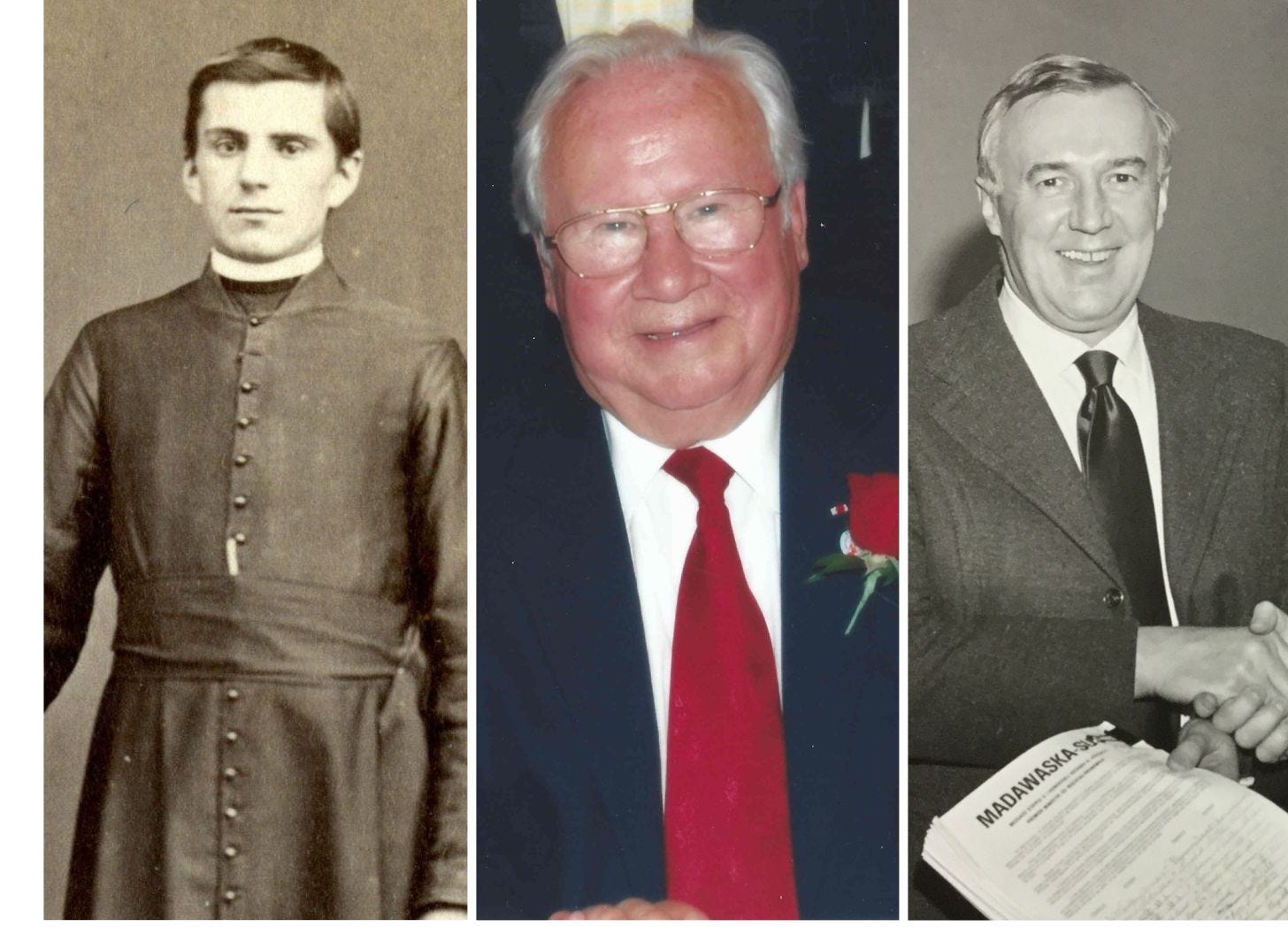
Hello everyone! Today, we’re welcoming my friend Louis Léger to Side Walks with the first of two reflections on the growth of Acadian rights, political power and cultural strength. Louis Léger had a front-row seat. He holds a Bachelor of Arts with concentrations in Political Science, History and Business Administration from the Université de Moncton, and spent four decades in the middle of the story he is telling, in politics, in business, and in government. He writes this with a sense of duty to share what he witnessed. Louis is the co-chair of the Moncton and Saint John 2029 Jeux du Canada Games bid committee. Next week: Part Two – What the Record Shows.
I was there near the beginning, or close enough to it that the memory runs in me.
The people making decisions today, and the people criticizing them, mostly weren’t there. They didn’t see what Kent County looked like before. They didn’t sit in the rooms where the arguments were made, the risks were taken, and the compromises were struck.
The awakening was happening in every Acadian region of this province, in the Peninsula, across the north to Madawaska.
This essay tells it through the southeast because that is where I lived and that is what I know. It does not pretend to capture every detail or every name. It is one witness, from one seat, of what was built.
To understand what was built in New Brunswick, you have to know where it started.
The first Acadians arrived in 1604, before any other Europeans established a permanent community on this continent. For 150 years, they thrived in what is today the Annapolis Valley in Nova Scotia. Then came 125 years of misery.
The Acadians had tried to remain neutral between Britain and France. The British were unconvinced.
The Acadians had lived alongside the Mi’kmaq for generations and would not turn on their friends. Families were forcibly separated to ensure the community would not survive. It was deliberate, but it did not work.
Some survived in Nova Scotia. Some became Cajuns in Louisiana. And many disappeared into the woods of New Brunswick, sheltered by the First Nations, and from there slowly, quietly, rebuilt.
In 1880, through the structure of the Catholic Church, Acadians were invited to participate in a national convention in Quebec City. It was the first time they had been invited to anything.
But something became clear in those rooms. The Acadians were warmly welcomed as French Canadians. And that was precisely the problem.
They were not French Canadians. They were Acadians, with their own history, their own survival.
The turning point came the following year.
A message went out through the parishes: it was time to come out of the woods and discuss the future. In 1881, with no telephone and no internet, word of mouth alone, five thousand Acadians descended on the village of Memramcook in New Brunswick. All expectations were blown away. They would make clear to the world who they were.
It would take another 80 years before the conditions existed to act on that declaration. What happened when they finally did is what follows.
The people who built it are the place to start.
The Field in Kent County
Before the generation that built in the same direction as political currents, there was the generation that built against it with nothing but refusal.
Msgr. Marcel-François Richard was a curé from Kent County, and what was done to him and what he built tells you everything about the era that preceded the investment.
Father Richard was born in 1847 in Saint-Louis-de-Kent, the son of a farmer. In 1874, convinced that Acadian children needed access to education in their own language, he founded the Académie Saint-Louis. By 1876, it had become a college.
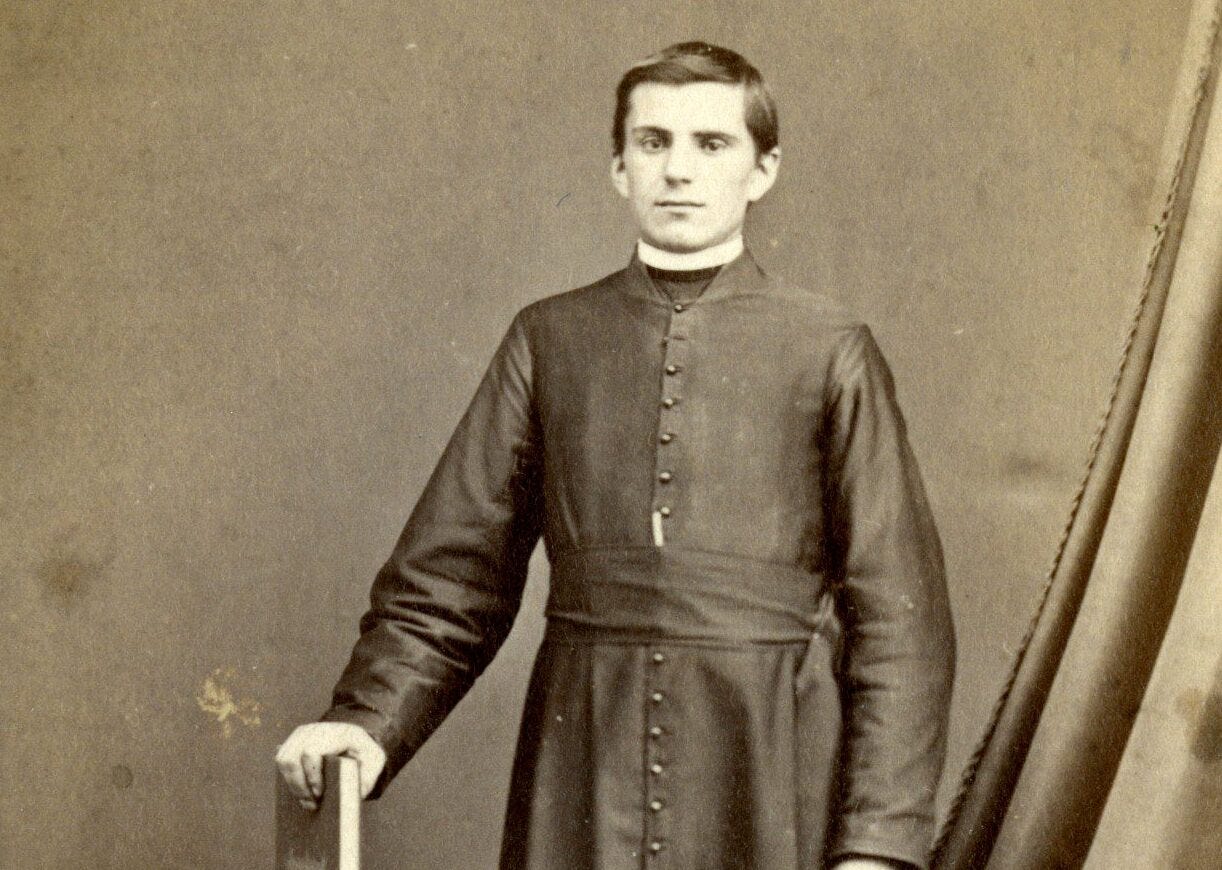
His bishop, the Irish-Catholic James Rogers, ordered Father Richard to make it bilingual or close it. Father Richard refused. He understood what bilingual meant. It meant English. Bishop Rogers shut Académie Saint-Louis down in 1882. His reported verdict: it was too French.
The year earlier, in 1881, Father Richard attended the first Convention nationale des Acadiens at Memramcook, the first time since 1755 that Acadians had gathered as a people.
At that convention, Father Richard argued successfully for August 15 as the Acadian national holiday, the Feast of the Assumption. Deliberately not June 24. Not the Feast of Saint-Jean-Baptiste, which is Quebec’s national holiday.
The choice was a statement: to ensure no one got confused, Acadians were not Quebecers. Acadians are Acadians, with their very own history.
When a second convention was planned in Miscouche in 1884, Bishop Rogers ordered Father Richard not to attend. He went anyway, and he did not go empty-handed.
He had arranged for a flag to be sewn in secret: the French tricolour, with one deliberate distinction: on the blue field, a gold star representing the Virgin Mary, patroness of the Acadian people. The delegates adopted it.
That was strike three. Bishop Rogers stripped Father Richard of his parish and sent him into the wilderness, literally. A new mission, deep in the woods, far from conventions and colleges and the trouble he had caused. Bishop Rogers named the new parish after himself – Rogersville.
Father Richard built it anyway. Because that is what he did. What he built, he built against the current. The generation that followed him would expand upon it. The conditions had finally changed enough to make that possible.
Two of those who followed were the men closest to my own life.
Building Out From Kent County
My wife Jacqueline’s grandfather, Prospère Girouard, took over the family farm at Sainte-Marie-de-Kent in 1929, the year the world fell apart. He would operate it for the rest of his life. Those who knew him called him le parrain, the Godfather of Kent County. The record bears that out.
He was a county councillor from 1942 and county warden from 1958. He served as president of the Rural Municipalities Association, president of the Union of New Brunswick Municipalities, chairman of the advisory committee at Stella Maris Hospital, president of the Kent County School Trustees Association, and a member of the New Brunswick Board of Commissioners of Public Utilities.
He was also a member of L’Ordre de La Patente, the quiet network that worked in the background to advance Acadian interests in the years before those interests had any other organized home.
He was, in short, the man who ran the civic infrastructure of Kent County for a generation: schools, hospitals, agriculture, municipal governance.
Before the 1960 election, Premier Hugh John Flemming drove out to the farm in Sainte-Marie and personally asked Prospère to run. That image has stayed with our family for over 60 years: a Conservative premier, on foot, in an Acadian field, making his case.
Prospère considered it but said no. He had known Louis Robichaud for years; they were friends, they fished together, and La Patente, the network Prospère belonged to, wanted that moment to land without interference.
But the decision was his, and it was clear-eyed. He was already at the table, and no one in Kent County civic life could ignore him. He had spent decades building real control over the institutions that mattered to his community. That was not something you walked away from to lose a seat in Fredericton.
Prospère made things happen. This was one of them.
Years later, he would encourage my father, Omer Leger, to run in 1971, and by then the groundwork was already laid.
Prospère had arranged for Omer to chair the newly created local school commission, with a new high school for Bouctouche in the works. That was how he operated. He did not recruit candidates. He built the conditions that made them ready.
Prospère was also among the men who led Sainte-Marie parish to establish its Caisse Populaire, and who helped neighbouring Kent County parishes do the same. It was quiet work. Nobody held a press conference. But it was the kind of work that compounded across generations: capital kept in the community, lent back to the community, building the ecosystem that would eventually make everything else possible.
The institution that these men built, known today as UNI Coopération Financière, now holds over $5 billion in assets and serves more than 155,000 members. It is the largest New Brunswick-owned financial institution in the province. It began, parish by parish, with men like Prospère Girouard walking their neighbours through the paperwork.
That purpose ran in families. My father-in-law was sent to the University of Notre Dame to obtain his PhD in Physics, not only for personal advancement, but with a clear purpose: to come back and help create a science faculty at the Université de Moncton.
He did.
This was not accidental. The community understood that a university without qualified professors was a building without a foundation. So they sent their own people out, on purpose, with the expectation they would return. Many did.
That is how you build an institution from nothing: you decide, before the institution exists, who will staff it.
But institutions alone are not enough. The same generation that built the civic infrastructure also understood that without culture there is no soul.
Culture Made Real
Author Antonine Maillet gave the Acadian people a character they did not know they needed. Her novel La Sagouine was a fictional washerwoman, but drawn from life, someone who could read a room and understood things that people with more power and more education had missed.
My father knew Antonine Maillet and Viola Léger, the actress who brought La Sagouine to life, and it was a story he could never let go.
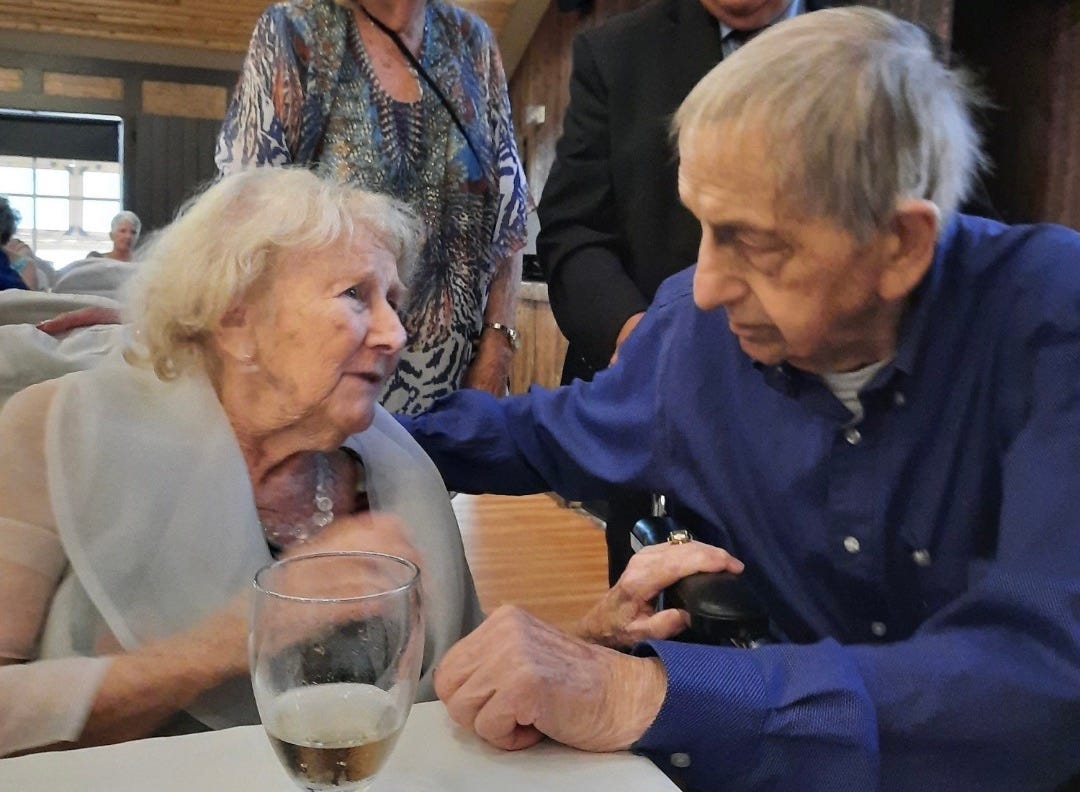
He, with Lionel Mills, a former mayor of Bouctouche, convinced Antonine, one friend to another, that La Sagouine deserved her pays. That she could rise up from the written word and have a place of her own.
It was not universally welcomed at first. For some in the community, a washerwoman as ambassador was an embarrassment, not a celebration.
Today Le Pays de la Sagouine is a testament to Acadian cultural richness, for everyone to enjoy, a place to laugh and to think.
La Sagouine left behind a saying that was written to me personally on a poster, signed by Viola Léger in the character she made immortal: “C’est pas d’aouère de quoi qui rend une parsonne bénaise… c’est de savoir qu’à va l’ouère.” It translates to: ‘It is not having something that makes a person happy…it is knowing that she will achieve it.’
That is the philosophy of a people who survived on faith and the long view. The servant has her own country now.
Gérald Leblanc, a poet from Bouctouche, Kent County, gave a generation a language for what they were living.
He wrote most of the lyrics for 1755, the band named for the year that scattered a people, the most celebrated band in Acadian history, formed in 1975 at the height of the transformation.
Gérald walked everywhere he went. I loved giving him rides when I spotted him around town. He left his tuque in my car once. I still have it.
Before politics, there was the institution.
My father’s career began and ended at Assomption Vie, the Acadian insurance institution whose CEO was Gilbert Finn, a man whose leadership is impossible to fully measure; his distinguished public life would eventually take him to Government House as Lieutenant-Governor of New Brunswick.
My father’s first boss at Assomption Vie was Léopold Belliveau, who would go on to become the first Acadian mayor of Moncton. The institution that trained them both was doing more than selling insurance policies. It was producing the leadership that would go on to govern the city itself.
My father kept his Assomption Vie licence until the day he died. He knew exactly what it meant.
What My Father’s Generation Built
My father won the by-election created when Louis J. Robichaud, having lost the government in 1970, resigned his seat. Robichaud was a neighbour who lived three minutes from our house.
The man who lived three minutes down the road had set in motion one of the most transformative acts of governance in this province’s history: the Equal Opportunity reforms that created the framework for a modern provincial government, equalizing services across New Brunswick and dismantling a system where the county you were born in determined what education, health care, and public services you could access.
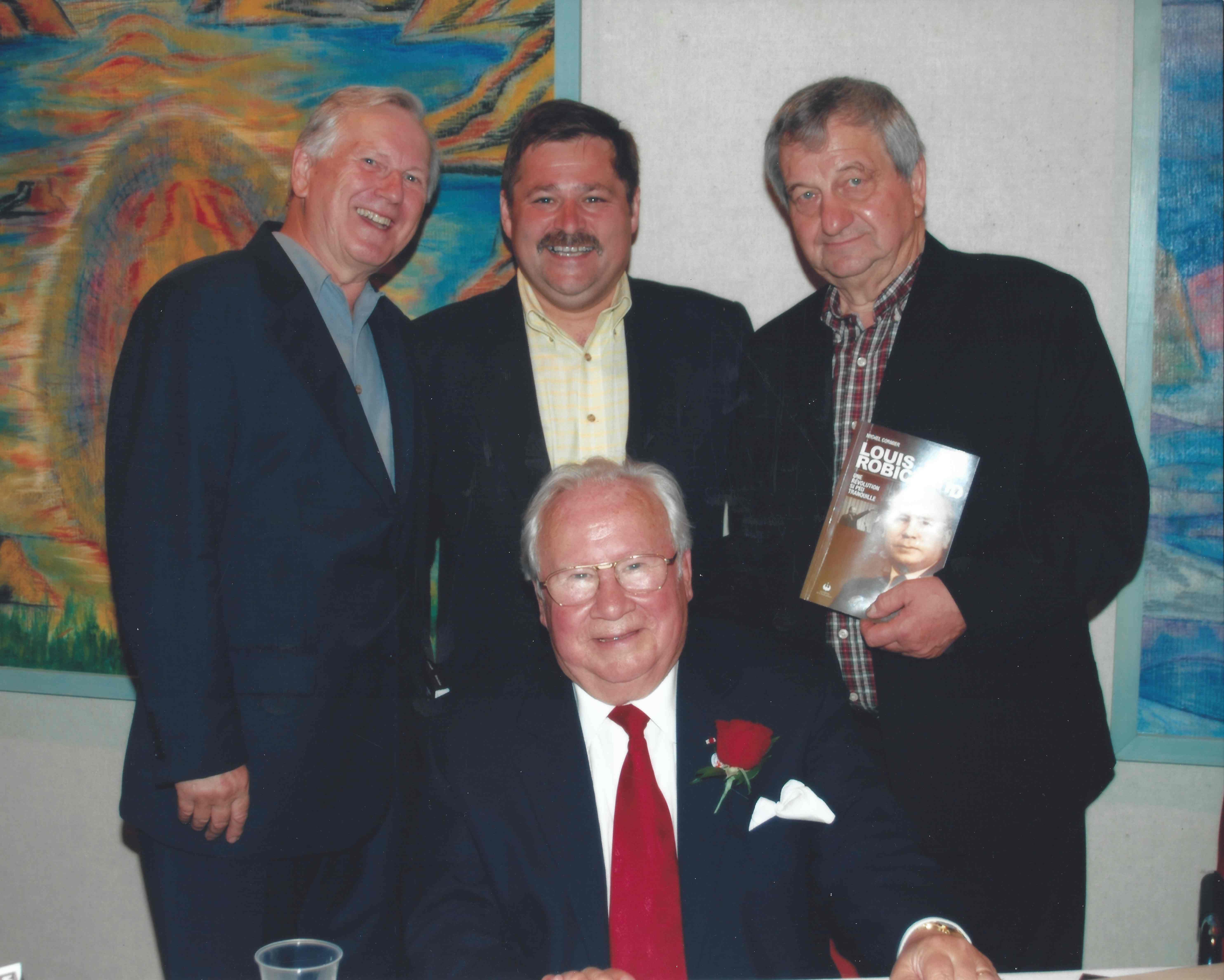
My father Omer Léger was, as those who knew him would say, like a fish in water when it came to politics. He couldn’t help it. His famous quote was that “he felt like a blueberry in a strawberry pie.” If he had $20 in his pocket and someone needed it, he gave it.
In his last days, well into his nineties, he was still giving me lists of constituents who needed help and projects that deserved attention. The impulse never left him. It was not ambition. It was his vocation.
He came of age in a New Brunswick where social services were delivered, if at all, from the home of a member of the legislature because the infrastructure to deliver it any other way barely existed. He understood with the clarity that only poverty teaches what it means to govern a community that had largely been left to fend for itself.
I remember hearing someone say, with genuine indignation, that the government was building too many Acadian schools. The implied criticism was that resources were being lavished on one community at the expense of another.
What that criticism conveniently omitted was the baseline: we didn’t have a school system. A few buildings were finally going up. But there were no francophone school boards, no standardized training, no professional teaching corps.
Where francophone schools did exist, many classrooms were staffed by teenagers with no formal training, and counties were so broke that Gloucester County, which includes Bathurst and the Acadian Peninsula, once mailed out teacher salary cheques and ran out of money.
The investment in Acadian schools wasn’t preferential treatment. It was the first instalment on a debt that had been accumulating for generations.
When the Hatfield government announced the construction of l’école Ste-Anne in Fredericton in 1974, it was met with anger by a small but vocal segment. The school was meant for Acadian families who had moved to Fredericton to follow jobs created by the transfer of county government responsibilities to the province.
The anger was not about a school. It was about Acadians breaking through the glass ceiling that had been imposed on them, and being blamed for it.
It did not matter to those opposed to l’école Ste-Anne that the capital region benefited more than any other in the province from the transfer of government responsibilities. The hostility was real enough that RCMP protection was necessary, even at our home in Saint-Antoine.
A French-English Coalition Rises
My father’s generation built important institutions alongside anglophone colleagues who understood, whatever their disagreements, that a province is only as strong as the institutions it chooses to invest in. They argued, they compromised, they sometimes got it wrong, and they kept building anyway.
The coalition that built southeastern New Brunswick had anglophone faces as well as francophone ones, and it is worth naming some of them. Not as a list, but as what they were: people whose way of being in the world made the coalition possible.
Larry Nelson was CEO of Lounsbury, one of the great anglophone business dynasties of southeastern New Brunswick. But what he practised was relationship building.
Every golf tournament, every networking event, every room he organized had every community in it. He always ensured that all members of all communities were invited. That was not a policy. That was how he did business. He connected people together.
One day, he came to see me. He said: every time you asked me for support, I tried to give it. Now I need you to sit on the major donor committee of the Moncton City Hospital. The anglophone hospital. I said yes. That was Larry’s way, and all who knew him understand what that means without explanation: fair, inclusive, respectful always, and as honest as they come.
Roger Clinch had been mayor of Bathurst and the public face of Brunswick Mines. He carried a big stick and used it as a force of good.
He grew up in an environment where he had seen the hostile attitudes up close and chosen a different path. When he was asked to run in Gloucester County in 1984, he won the heart of the Acadian Peninsula not because he spoke their language perfectly, but because his body language matched what he said.
He was generous, wise in his counsel to many, and an example at the provincial level of exactly what Larry was in the southeast. The people who knew him had a name for it: Roger’s way. It meant the same thing Larry’s way meant. Everyone trusted him. Without people like Roger Clinch, the coalition does not work.
Dan Skalling was my father’s Deputy Minister of Tourism, an anglophone who understood what the government he served was trying to build, and who lived it in practice.
His gift was diplomatic repair. When bad management created a language incident – a security commissioner facing a barrier, a service failure that could have become a headline – Dan fixed it.
He found the accommodation, smoothed the edges, and kept the system working. He did not treat every failure as evidence that the framework was wrong. He treated it as a problem to be solved.
He took me everywhere. Into rooms I had no business being in as a kid. Years later, he became my boss in Saint John MP and the senior federal Minister for New Brunswick Gerald Merrithew’s office. That relationship ran across two decades and two governments. That is what real trust looks like.
Gerald Merrithew attended the Caraquet Acadian Festival on August 15 virtually every year he was in office. He understood how much it mattered. He once told me directly that he was proud to have been part of the government that built the Village Historique Acadien.
Larry built the room and made sure everyone was invited. Roger and Gerry carried the authority and used their stature as a force of good. Dan kept the room from breaking, treated every failure as a management problem, not a structural one. Different men, different functions, all essential to the same coalition.
I could name many more. It is not the names that matter. It is what they represented: anglophone New Brunswickers who understood what was being built, chose to be part of it, and made it stronger by showing up.
They were not unusual. The vast majority of anglophone New Brunswickers were fair-minded people who understood that lifting one community did not come at the expense of another. The resistance was always louder than it was large.
Challenge Assumptions
There is a belief held by some people with influence in this province that what that generation did was not an investment. It was patronage. It was vote-buying. That the Acadian community rose not because the institutions worked but because money was spent to purchase political loyalty.
I know this belief exists because it was said to me during my time as deputy minister and chief of staff. “I will never do what Richard Hatfield did. I will not buy the Acadian vote.” It stopped me. It hurt because of my history.
What the record shows is not favouritism or patronage. It is a community that started with nothing and built what it needed to survive and then grow.
The schools were not gifts. The hospitals were not favours. They were the first response to generations of absence. And the return on that investment is not a matter of opinion. It is a matter of public record.
The belief persists anyway. It lives under the surface. When it goes unchallenged, it becomes the basis for real decisions. People begin to draw judgments from feelings and exceptions rather than from the documented record. That carries a price this province cannot afford.
Brenda Robertson was my father’s friend and the first woman elected to the New Brunswick Legislative Assembly. Together they championed the extramural health program, a first in Canada. It would eventually care for him in his own home in his final years.
He fought for the modern hospital where he would draw his last breath. At 92, he died in a system he had helped establish, cared for by institutions his generation had built from almost nothing.
That is what investment looks like 50 years later. It is not a politician enriching himself, nor is it votes being purchased. It is a man dying with dignity in a community that had the infrastructure to care for him, infrastructure that did not exist when he was elected.
Stories connect us.
If this essay resonates with you, please share it. That’s how you can help us build a community of readers who care about supporting East Coast voices in our national conversation.
Support Local Reporting & Analysis
Want more insightful commentary like this? Becoming a paying supporter of Side Walks and follow our continuing coverage of the issues shaping Atlantic Canada’s future.
Stroll Over to Side Walks For More Stories


AI Summary: A firsthand account of how Acadian communities in southeastern New Brunswick transformed from a historically marginalized people into a thriving, institutionally rich society. Spanning from 19th and 20th century, the essay traces how determined leaders, priests, farmers, politicians, and artists built schools, hospitals, financial cooperatives, and cultural landmarks against enormous resistance. Anchored by Louis Robichaud’s landmark Equal Opportunity reforms and figures like civic leader Prospère Girouard and author Antonine Maillet, the story argues that Acadian advancement was not political patronage but the long-overdue return on generations of deliberate, community-driven investment — made possible in part by fair-minded anglophone allies who chose to build alongside them.
Keywords: Acadian history, New Brunswick, Louis Robichaud, Université de Moncton, Caisse Populaire, La Sagouine, Kent County, Equal Opportunity reforms, Acadian institutions, Maritime heritage
 | A guest post by
|
These lines resonated with me. Looking forward to reading Part 2!
They argued, they compromised, they sometimes got it wrong, and they kept building anyway.
He did not treat every failure as evidence that the framework was wrong.
…fair-minded people who understood that lifting one community did not come at the expense of another. The resistance was always louder than it was large.