


Stories connect us.
If this essay resonated with you, share it with others who want to understand the world from an East Coast perspective. Every share brings more voices into the discussion and strengthens independent reporting on Canada’s East Coast.
It cost just over $1,000 to lose my third-favourite winter jacket.
Truthfully, it had been destined for the donation pile when shortly after 8 p.m. on New Year’s Eve, my daughter looked at me, smiled that smile our children use when they are trying to charm us, and asked if I had a winter coat I wouldn’t miss if it was lost.
She wanted, she explained, to wear a coat because she and her friends would be hopping around Saint John’s bar scene on a frigidly cold night, but she thought the odds of it being stolen or lost were better than even, and she wanted something that wouldn’t be missed.
So out came my old olive green Columbia ski jacket, bought during an end-of-season sale, Poley lift tickets from seasons past still dangling off the zipper.
It was the last I saw of it.
The jacket went missing in the dying hours of 2025 from beneath a pile of coats at Woodchuck’s on Prince William Street, a victim of either drunken mistaken identity or simply stolen by an under-dressed reveller shivering in the new year.
My daughter sheepishly apologized the next morning, and again on the following day, as I kissed her good-bye at Saint John’s lone airport security gate to send her back to Toronto and university life.
A week in Saint John to see her parents and celebrate the new year with friends that cost $1,086.18.
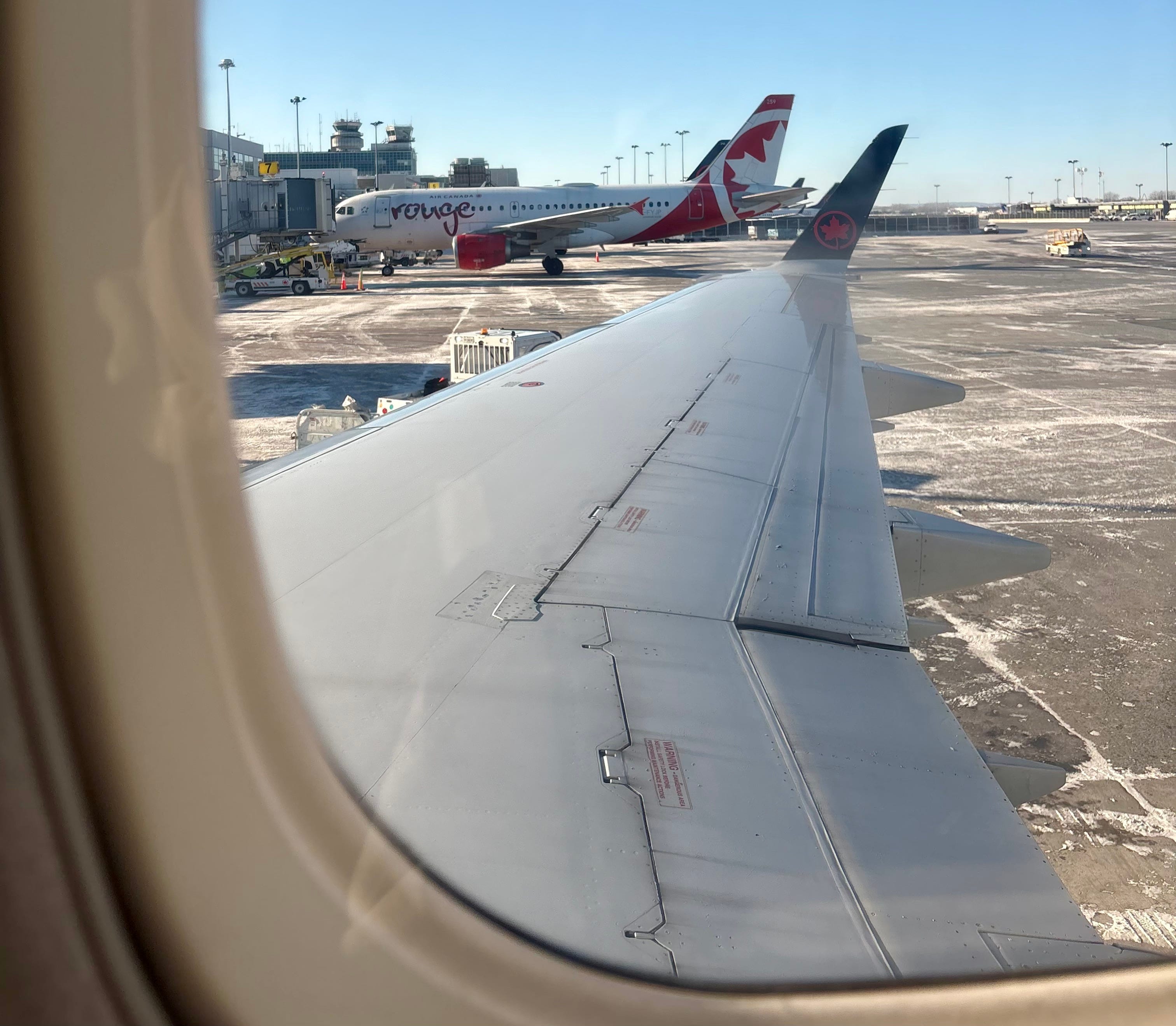
Saint John is a two-hour, non-stop flight to Toronto, or, as is increasingly more common, closer to four hours, courtesy of a hurried stop in Montreal.
The Maritimes is many things, but one thing it isn’t is cheap to access.
We pay a pretty penny to stay connected within the region and with other parts of Canada.
Back in 2018, I gave a TEDX Talk about the high cost of connection and using that pernicious problem to jump-start regional innovation.
You can watch the full speech below, but I want to highlight the portion where I compare my two homes: Mississauga and the GTA where I grew up, and New Brunswick where I have now lived for close to three decades.
So here’s a fun fact: the distance between Hamilton and Oshawa, basically the western and eastern ends of the greater Toronto area, is roughly the same distance as between Saint John and Fredericton. That’s basically where the comparison ends.
If you want to travel around the Greater Toronto Area (GTA), you have all sorts of public transportation options. There’s the GO Train, which travels between Hamilton and Oshawa and which connects to municipal transit systems, most notably the TTC, which can get you around Toronto on the subway, bus and streetcar. This public transit system is also connected to Pearson International Airport, from where you can fly to and from just about anywhere in the world...
Now, this week I needed to get to Fredericton, a trip I make multiple times a month. What were my options?
Well, there was only one. Me alone in my car, bombing up and down Highway 7.
Yes, I know there is a bus but it isn’t designed for commuter or business travel. The only way for me to get to Fredericton is for me to drive myself.
Since I gave that speech eight years ago, the GO Train system has been extended to Niagara Falls – and I’m still driving solo to Fredericton.
There are any number of economic reasons for our road trips, expensive flights and practically non-existent passenger trains. As we are often told, we simply don’t have the population or economic output to financially support a robust public transportation system.
So, we have built and governments maintain a system that transports goods and services. The latter being the word statisticians use to describe the output of skilled workers, such as engineers, tech specialists, lawyers, accountants, management consultants, travelling nurses, and tradespeople, all earning a living by boarding planes with too little leg room or making good time on the TransCanada Highway as they whiz by Cabano.
Maritimers are accustomed to this cross-country commute, except now, it feels different.
We know the strength of our connections can no longer be just about the economy.
Now, it’s about our sovereignty.
Our travel to the United States hasn’t dropped by 30 per cent over the past 23 months because we found a cheaper deal to EuroDisney.
Individual citizens are very conscious choices to disconnect from the United States and reconnect to each other and the rest of the world.
In losing the comfort of an old relationship, we’ve found a common purpose to rally around.
It’s not business, it’s personal.
And as I said eight years ago, “[we] come up with the best solutions when we are personally invested in the outcome.”
As we motor into 2026, we need to consider how and who we connect with and the value we all bring.
Support Local Storytelling & Reporting
Want more essays like this? Becoming a paying supporter of Side Walks and follow our continuing coverage of the issues shaping Atlantic Canada’s future.


