

Trust is New Brunswick’s Scarcest Resource
It isn't lost in a single decision; trust disappears when people can no longer see how decisions are made

Trust us, we’re interested in East Coast affairs.
If this story piqued your interest, please share it. Every share helps spread knowledge about the ins and outs of local affairs and keeps independent reporting strong on Canada’s East Coast.
A week ago, in the middle of a mindless social media scroll featuring tiny donkeys, I came across a video by a young woman with the handle Mackavelimillz: “3 Hot Takes About Scandinavia From an American Who Lives Here.”
This – while not an adorable donkey video – I obviously had to watch. Canadians, after all, regularly compare themselves to Scandinavian countries, so an American talking about her perspective of our political cousins was my kind of clickbait.
The video itself was a pleasant surprise. While it only actually covered one of the alleged three hot takes about Scandinavia (I did not have the patience to find the other two), Hot Take Number One was something I’ve been thinking about all year: trust.
In short, Mackavelimillz explained that in Scandinavia, trust is not about faith in humanity: it is about predictability. Norway, she said, is remarkably consistent: trust in a government, a business or an individual is not an act of faith but a reasonable assumption based on experience.
It’s a conditioned response that reinforces itself: people act as though others are trustworthy, which pushes them to be trustworthy, which confirms the assumption and deepens the trust.
What struck me most about the video is how it felt like the complete antithesis of what I see in New Brunswick. Over and over, we see New Brunswickers rising against proposals for business development, public policy changes, infrastructure improvements and resource development. Sometimes we call this opposition NIMBYism. Other times, we call it a bias against cronyism. But at its heart, what it really is, is distrust.
That distrust runs deep. New Brunswickers don’t trust their government, private industry or public utilities. Experience has conditioned them to expect the worst.
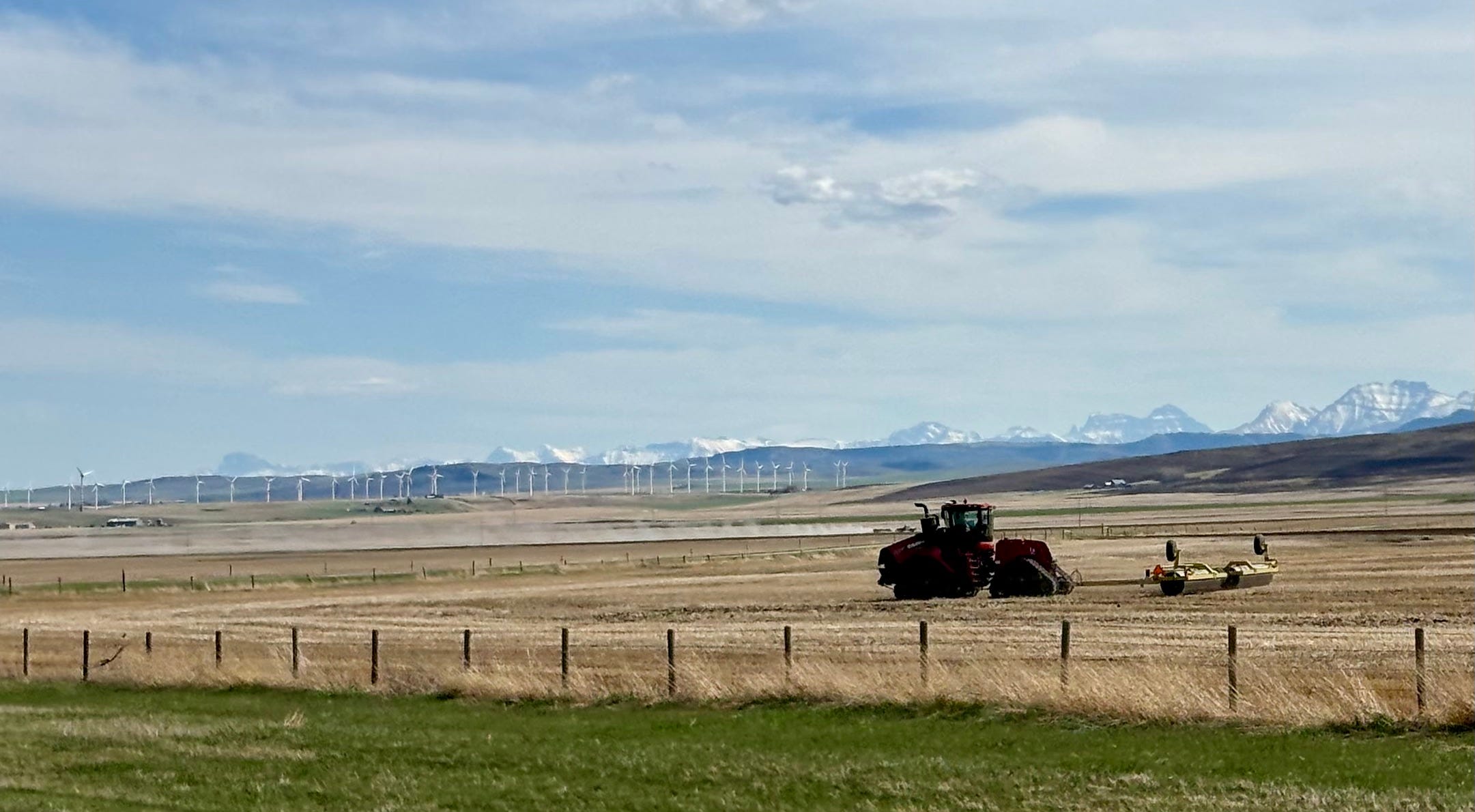
A public meeting for a windfarm development drove that home to me recently. The opponents of the development were scathing in their summation of what they felt was happening. The government and the businesses involved, some said, were all “in it” to make money and would shove innocent locals aside to build monstrous bird- and bat-killing towers to collect their loot.
Some believed the project approvals had been rigged from the start. That community members had been shut out of the conversation; facts had been hidden; homeowner rights were under threat; the environment would be harmed, willfully and permanently, and all so some private developer could turn a profit.
The cynicism and disdain for the decision makers and business proponents was grim. While only a few people at the event spoke with such contempt, the fact that anyone did was both heartbreaking and madly frustrating.
Why are so many New Brunswickers so distrustful of government and industry? How can we improve the province’s fortunes if we have so little faith in our institutions? Part of the answer starts with a simpler question: how can anyone trust information they never receive?
Proponents can’t reach their audience
Imagine you are Natural Forces, a wind farm developer trying to engage with a community. You mail information packages to targeted communities via Canada Post. You advertise on the radio. You hold an information session. But how many people have you actually reached? Unsolicited mail often goes straight into the recycling bin. Radio competes with podcasts. The local newspapers that once announced public meetings have disappeared or been reduced to limited availability.
One of the internet age’s most common complaints is that an increasing number of Canadians live in a news desert. As advertising revenue disappeared, so did the local reporting that once explained complicated issues and carried public notices into people’s homes. This summer, L’Acadie Nouvelle cut back from five printed editions a week to two, joining the Telegraph-Journal, Times & Transcript and Daily Gleaner, all of which reduced print publication in 2023. New Brunswick now has no daily printed newspaper, and no national paper has circulated here since 2017.
This matters for reasons beyond journalism and the jobs newspapers create.
Communication isn’t public relations. It’s the infrastructure that makes transparency possible. If information can’t reach people accurately and in time, transparency becomes harder to demonstrate. Whether it’s withheld deliberately or simply never arrives, the result is the same: people feel excluded from decisions that affect them.
What aren’t they telling us?
Often, the information that matters most never reaches us.
For instance, NB Power has signed agreements with independent power producers since 2007 to develop, finance, build and operate renewable energy projects. Under these power purchase agreements, NB Power buys electricity at a negotiated price for decades while the developer builds and operates the facility. That price has been deemed confidential by our courts, which means New Brunswickers aren’t allowed to know what they’re paying for their own electricity.
The commercial case for confidentiality is understandable: public agreements would let future developers see past prices and adjust their bargaining accordingly.
But the people paying the rates can’t know the terms.
NB Power currently holds about 10 such agreements, and ratepayers still aren’t permitted to know the prices or terms. The Energy and Utilities Board reviews confidential details on the public’s behalf, but for most citizens, that just means being told to trust that someone else is looking after their interests. That can be hard to do.
When the process loses credibility
The Tantramar gas plant demonstrates why that public trust has become fragile.
The Energy and Utilities Board criticised NB Power for ignoring its own investment governance rules and giving its board inadequate information before signing a contract with US-based ProEnergy to install 10 gas and diesel turbines in rural Tantramar.
Auditor General Paul Martin later described “gaping holes” in the project’s assessment and criticised NB Power for signing its agreement with ProEnergy before obtaining regulatory approval.
Whether or not one supports the gas plant is almost beside the point. The process left many New Brunswickers believing the decisions had already been made before the public discussion ran its course.
The expression, “Just because you’re paranoid doesn’t mean they’re not out to get you,” used to be a joke. In recent years, the humour has drained away. Today, people genuinely believe someone is hiding something from them, and whatever it is, it’s a threat to their well-being.
That someone wears many faces: an elected official, NB Power’s C-suite, a member of the deeply private Irving family. The individual doesn’t matter. What matters is the belief that decisions are made behind closed doors, favouring a few connected interests, and that by the time the public hears about them, there’s little left to discuss.
The pattern people remember
New Brunswick’s trust problem wasn’t created by one government, company or utility. It developed over decades, as confidentiality became normal and disclosure the exception. Information increasingly belonged to institutions until someone forced it into public view.
As a result, every new controversy is viewed through the lens of the last one. Even good projects begin with a credibility deficit because the public is no longer evaluating the proposal. It is evaluating the institution proposing it and deciding on its relative trustworthiness with limited information.
That matters because trust is infrastructure. It’s what allows governments to build, utilities to invest, businesses to expand and communities to accept change.
We often ask whether a project has social licence. Perhaps we’ve been asking the wrong question. Social licence is not the beginning of the process. It is the end of it.
When the communications network weakens, transparency becomes harder to demonstrate. When transparency cannot be demonstrated, trust declines. Without trust, social licence disappears.
Sign-up and subscribe to Side Walks and follow our continuing coverage of the issues shaping Atlantic Canada’s future.

