

New Brunswick Leads the Way on Groundwater Protection
As communities raise alarms over local threats, the province has a chance to double down on its leadership in water protection — and turn public concern into a model of environmental sovereignty.

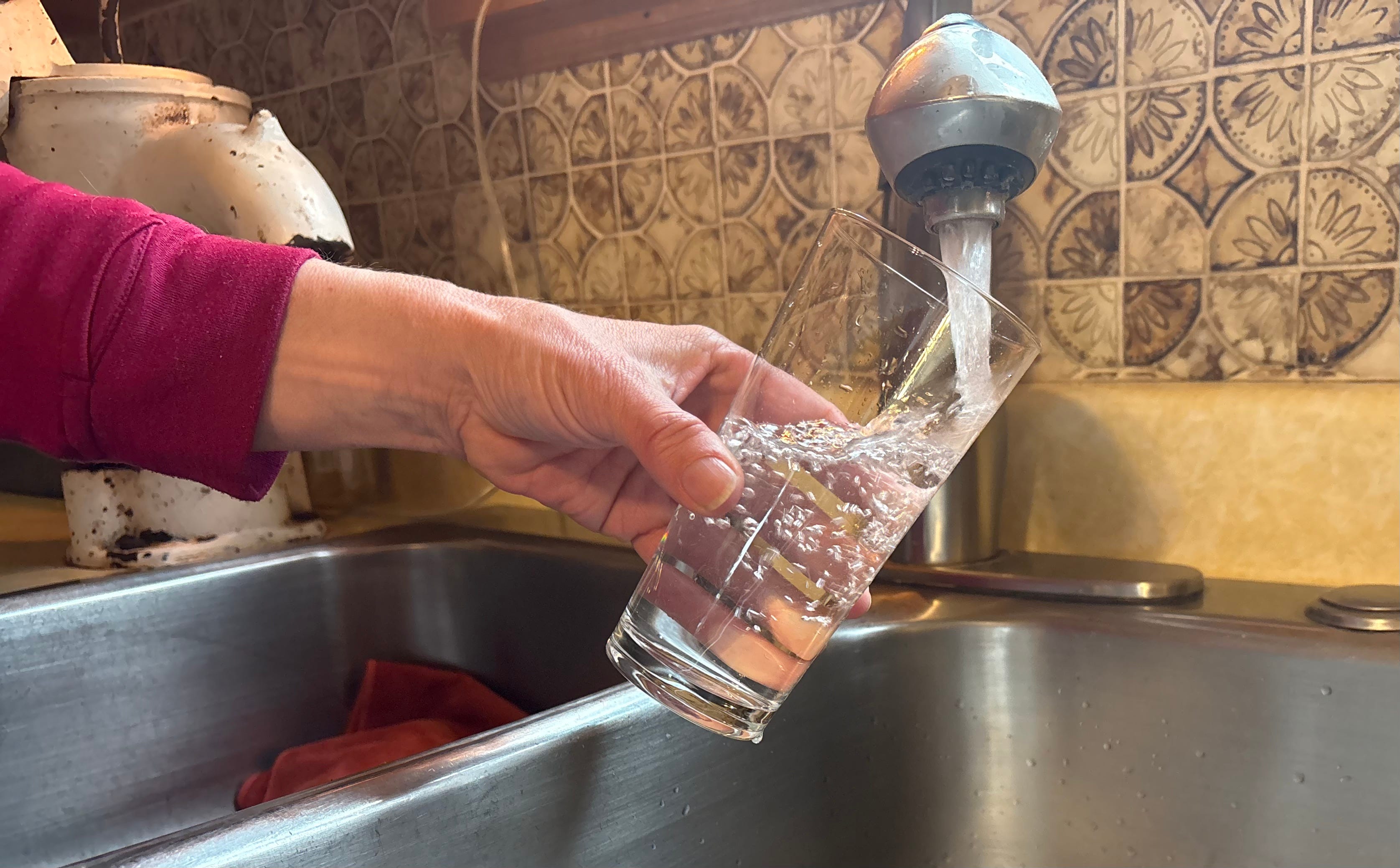
Worrying about the safety of drinking water isn’t NIMBYism.
Rather, it’s a fabulous sovereignty-solidifying, faith-fueling, money-making proposition – if we opt to see it that way.
Over the last few months, New Brunswick has heard from a number of citizens concerned about the state of their drinking water.
There are the folks who live near the Beardsley Road Irving gas station outside Woodstock, where a 100,000-litre diesel spill went undetected until employees at the neighbouring Tim Horton’s noted the water smelled like gasoline in mid-December.1
About 100 kilometres west of Woodstock, the proposed Sisson tungsten mine outside Stanley is raising the expected questions about water protection,2 as is EcoRock’s potential pozzolan mine in Dalhousie, at New Brunswick’s northern tip.3
Water protection also figured prominently in Saint John Common Council’s extended and divisive hearings over the rezoning of 510 acres in the semi-rural coastal community of Lorneville for an expanded industrial park connected to the anticipated growth of Port Saint John.
At its Monday, June 16th meeting, Saint John City Council voted unanimously to approve the rezoning, which included policy changes that will limit development to low-emitting light and medium uses and establish a 150-metre buffer zone between the industrial park and homes. That’s equivalent to about two-and-a-half hockey rinks in length.
Additionally, Council amended its Land for Public Purpose Policy so that, as Spruce Lake Industrial Park is subdivided, funds collected during that phase will be directed to Lorneville community projects.
Most notably for those residents concerned about water safety, Council also established a groundwater monitoring program to monitor all wells within the 150-metre buffer zone and any drinking water wells located within 600 metres of an industrial building or industrial activities. It will be designed and managed by an independent third party.
Now that the rules are established, it will be incumbent on the City of Saint John, with assistance from the provincial Department of Environment, to put those values into practice.
That is where trust will either be rebuilt, because the just-completed public exercise in rezoning surely diminished it, or it will continue to erode, as will the ties that bind the community of Saint John together.
Community ties already appear frayed in the village of Dalhousie and are potentially under threat in Stanley – unless New Brunswick takes the lead on protecting and investing in its water resources.
We’ve done it before. In fact, New Brunswick established itself as a national leader in water resource management. We are already best in class; it’s time we doubled down on this expertise while ensuring we live up to the standards we have set.
Side Walks is fully funded by readers who support our mission to produce local journalism. If you’re enjoying this story, please consider becoming a paid subscriber, $8/month or $80/year. You can also sign up for a free subscription. All subscriptions deliver Side Walks directly to your email inbox, and you can also read along on the Substack app.
Think of us as your friendly neighbourhood buskers setting fire to complacency while juggling a mix of coverage, commentary and culture – and this is the point in the show where we pass the hat. We appreciate your support!
In 2000, New Brunswick was one of the first provinces in Canada to create a comprehensive groundwater protection framework, the Wellfield Protection Program, which is regarded as one of the most structured and proactive groundwater monitoring models in the country.
It restricts and monitors land use around groundwater wells located underground, usually within 100 metres of the surface, using a science-backed three-zone model that works like this:
Zone A is the area within 200 metres of a well and has the highest level of protection, including banning fuel storage, septic systems and chemical use;
Zone B is between 200 and 1,000 metres, or one kilometre, of a well and restricts chemical storage, limits livestock grazing and regulates septic systems; and,
Zone C is between one and five kilometres from a well and regulates and monitors land use to prevent cumulative impacts.
New Brunswick is a national leader in groundwater monitoring because we need to be. We are the second-most groundwater-dependent province in Canada, with 65 per cent of our citizens relying on well water.
Our regulatory system monitors over 55 municipal groundwater systems, numbering over 200 wells, in Alma, Aroostook, Atholville, Baker Brook, Balmoral, Caraquet, Bath, Blacks Harbour, Bouctouche, Charlo, Clair, Doaktown, Dorchester, Drummond, Edmundston, Fredericton, Fredericton Junction, Grand Falls, Hartland, Hillsborough, Kedgwick, Lameque, McAdam, Memramcook, Miramichi, Moncton, Nackawic, New Maryland, Penobsquis, Perth-Andover, Plaster Rock, Port Elgin, Quispamsis, Richibucto, Riverside-Albert, Rothesay, Sackville, Saint Hilaire, Saint John, Saint-Andre, Saint-Antoine, Sainte-Anne-de-Madawaska, Saint-Francois-de-Madawaska, Saint-Leonard, Saint-Louis-de-Kent, Shediac, Shippagan, St. Margarets, St. Martins, St. Stephen, St.George, Sussex, Sussex Corner, Tide Head, Tracadie, and Woodstock.
Prince Edward Island is 100 per cent dependent on groundwater, making these two Maritime provinces the only Canadian provinces where the majority of residents are groundwater-dependent.
With stats like that, New Brunswick should be best in class.
If New Brunswick wants to remain a national leader in groundwater protection, it must resume acting like one.
That means not only maintaining the standards we set 25 years ago but also building on them in partnership with New Brunswick municipalities that have a vested interest in strengthening local protections.
Water safety shouldn’t lead to shouting matches.
We can all surely agree that safeguarding safe drinking water is a baseline requirement for companies that want to develop in New Brunswick.
Ensuring that is the responsibility of provincial, municipal and Indigenous governments.
It’s also an opportunity to lead by showing what environmental stewardship rooted in local sovereignty can look like in a province that powers and protects its natural resources in equal measure.
If you enjoyed this column, please share the love with others who you think would enjoy the conversation we’re having on Side Walks. We’re a Canadian media start-up building a community of fellow Canucks (and the people who love us) interested in finding common ground around complex issues by focusing on local repercussions and opportunities caused by national and global issues. We’re based in New Brunswick, on Canada’s East Coast. Cheers!
Stroll Over to Other Recent Stories on Side Walks You Might Enjoy
New TV series Revival comes alive in New Brunswick's deep, dark woods: The rural noir supernatural mystery pays homage to its graphic novel roots with a mix of humour, heart and horror that plays out on the back roads of Kings County
Built For Speed: A 24/7 workforce, a floating warehouse, and 3 million metric tonnes of French fries and other food products are next on the agenda for a resurgent Port Saint John
We Are River People: The East Coast may be known for its coastline, but here in New Brunswick, our mighty river systems play an equal part in defining and shaping our lives and culture.
The Crown Goes to Town: During today's Throne Speech, spare a thought for how peace and security can occur in places where natural resources are plentiful and peaceful co-existence is in short supply.
Tiptoeing Through The Rezoning: Saint John's piecemeal approach to industrial development is a weird way to build a provincial economy
Side Walks Home Page
Catch up on all our stories.
Jim Dumville, “Documents Indicate Larger-than-Expected Diesel Spill at Beardsley Irving,” River Valley Sun, March 3, 2025, https://rivervalleysun.ca/documents-indicate-larger-than-expected-diesel-spill-at-beardsley-irving/.
Jennifer Sweet, “Watershed Group Hopes 'Fast-Tracking' Won’t Let Sisson Mine off the Hook for Environmental Protections,” CBC News, June 15, 2025, https://www.cbc.ca/news/canada/new-brunswick/sisson-mine-critical-minerals-1.7559254.
Lisa Hrabluk, “The Crown Goes to Town,” Side Walks, May 27, 2025, https://www.sidewalksmedia.ca/p/the-crown-goes-to-town.