


Stay in the Know.
If this story piqued your interest, please share it. Every share helps spread knowledge about the ins and outs of local affairs and keeps independent reporting strong on Canada’s East Coast.
Facing a history‑making $1.3‑billion deficit the Government of New Brunswick is honing in on three major projects and a lean oversight structure in an attempt to do fewer things better as fiscal pressures tighten.
Driving that shift inside government is a virtual Major Projects Office that reports to Premier Susan Holt and is currently focused on three files: the Saint John Trade Corridor, the Port of Belledune expansion, and the Sisson Mine.
There is no new department with its own org chart and budget. Instead, a small group of senior civil servants have been asked to treat these three projects as their day job within their day jobs.
“We put an accountability system in place with the identification of priorities, with the measures that we set against them,” Holt told me in a recent interview following her late January State of the Province address. “That wasn’t a meaningless exercise. We have since used [it] to focus our efforts on where we put people and time and to then review the results, be informed by the results, and have that continue to influence government direction over the next year ahead.”
Internally, the emphasis is on coordination and follow‑through. The office exists to do a few simple things that governments in this province have historically struggled with: narrow the list of priorities, resolve inter‑departmental conflicts, and move chosen projects through the system at something closer to private‑sector speed.
Each of the three projects touches multiple departments. Sisson Mine alone involves seven departments.
On previous major projects, those relationships were largely informal. If a file stalled in one branch, it could quietly delay work in several others.
When departmental mandates clashed, such as the desire of economic development-focused departments to move fast bumping against environmental and regulatory offices demanding rigour, there was no clear, early mechanism to address these competing demands.
In truth, neither trumps the other. What is required, is a clear process and leadership that can shift through various demands and arrive a solution that provides more help than harm.

That’s what New Brunswick’s Major Projects Office is meant to do. Its job is to identify where policies or interpretations collide on a specific file and bring those conflicts to cabinet and to the Premier for a decision.
The Office reports directly to the Premier and to the lead cabinet ministers for each file. Natural Resource Minister and Hampton-Fundy-St. Martins MLA John Herron is lead on Sisson Mine and the Saint John Trade Corridor; Deputy Premier, Finance and Energy Minister, and Bathurst West-Beresford MLA René Legacy is the lead for the Port of Belledune.
This, in theory, should speed decision-making at a time when the provincial government is running out of fiscal room to paper over structural weaknesses.
The stakes are clear, says Holt. “We are not in the days we were in just a couple years ago, when population growth and general economic growth were fueling the kind of budgets that paid for our expenses,” she said in an interview following her State of the Province address. “We saw population growth stall and economic activity retrench, kind of overnight. So, while the fiscal picture is going to require some hard decisions, we see lots of opportunity.”
Those opportunities, as she describes them, are tightly linked to the kinds of projects now sitting with the Major Projects Office. “We see economic opportunity…in our mineral assets, in our infrastructure, in defense opportunities, in food, in fish, in things that we’re really good at. And we now see people all over the world wanting to build these trade relationships with New Brunswick, and we have a window to strike while the iron is hot.”
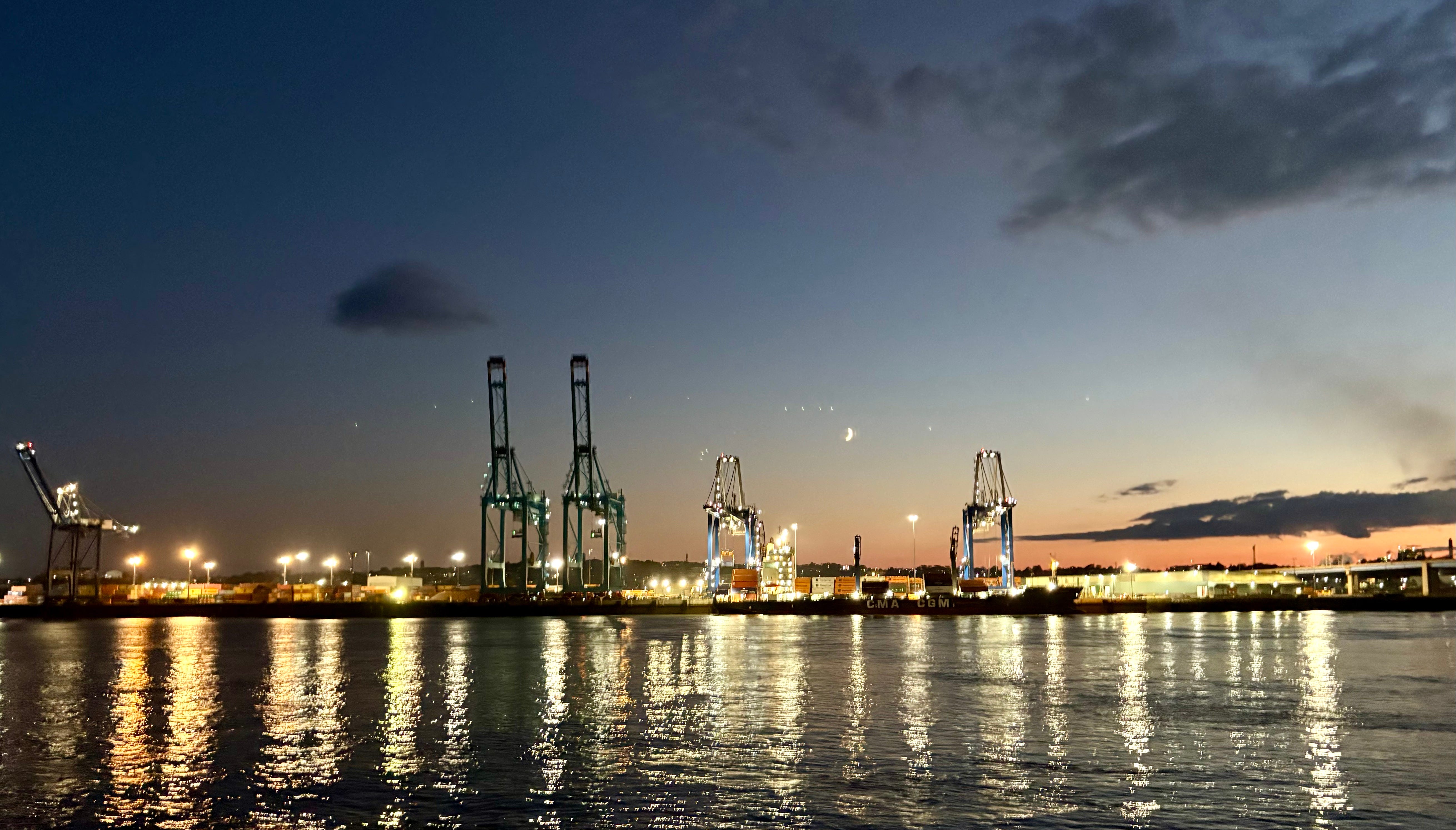
The Saint John Trade Corridor is the clearest example of how the new model is meant to work.

When Ottawa signalled it wanted “projects of national interest,” Saint John initially produced a long list of self‑declared priorities. The Major Projects Team worked with the City to rethink its priorities and define a single corridor project with four clear objectives: increase capacity, improve safety, protect critical infrastructure, and remove bottlenecks in and around Port Saint John and the City’s west side.
Within that, three concrete components emerged: a rail upgrade, a port project, and the long‑discussed overhaul of Simms Corner, the notorious junction that is now slated for a significant redesign.
By bundling those elements into a coherent, single project, the file is now viewed in Ottawa as a single, integrated project rather than a pile of disconnected asks.
That discipline around definition and selection is also a response to what New Brunswick officials saw in other jurisdictions.
The federal Major Projects Office has become a magnet for every big idea in the country, and now spends much of its time sorting through proposals rather than driving a manageable portfolio forward.
Provinces that created sector‑specific offices warned New Brunswick that the fastest way to fail is to promise too much and then drown in expectations. Holt’s team is trying to avoid that trap by keeping its formal list to three and defending that number fiercely.
Holt herself has framed a big part of her job as managing not just policies, but emotions and expectations. New Brunswickers, she says, “want to be seen and understood” and want their leaders to acknowledge when “things aren’t great, things are tough,” including on politically painful issues like the cost of living or power rates, before talking about solutions.
On major economic files, she is equally blunt that “fast” is still measured in years, not months. “I’m really impatient,” she said. “And unfortunately, a realistic...rapid timescale in any of these things would be a five‑year period.”
By that standard, if New Brunswick can get approvals in place and early investments the province can optimistically hope to begin to see benefits in 2028.
None of this guarantees the three flagship projects will land on time, or at all. The province is still working with finite staff, finite political capital, and a complex set of federal rules.
The test over the next five years will be whether New Brunswickers see more than talk: whether the Saint John Trade Corridor, Belledune Port expansion and Sisson Mine move from charters and check‑ins into cranes, crews, and contracts – and whether that, in turn, helps pull the province’s finances back from the brink.
Support Local Storytelling & Reporting
Want more analysis like this? Becoming a paying supporter of Side Walks and follow our continuing coverage of the issues shaping Atlantic Canada’s future.
Stroll Over to Side Walks For More Stories


AI Search Summary: New Brunswick is confronting a record $1.3‑billion deficit by narrowing its economic growth strategy to three priority projects: the Saint John Trade Corridor, the Port of Belledune expansion, and the Sisson Mine. To manage this reduced portfolio, the provincial government has created a virtual Major Projects Office that coordinates work across departments, resolves policy conflicts early, and aims to move approvals faster than traditional processes allow. Premier Susan Holt has linked her government’s accountability to measurable progress on these files, positioning them as central to the province’s plan to strengthen economic performance and stabilize long‑term finances. The approach replaces years of dispersed priorities with a focused system intended to improve execution, though timelines remain long and success will depend on staff capacity, federal cooperation, and sustained political attention.