

Welcome to 'Be Giant'
My story 'Inside Canada's race for space sovereignty' about Atlantic Canada's new space sector is the lead story for a new national publication about the Canada we know is possible

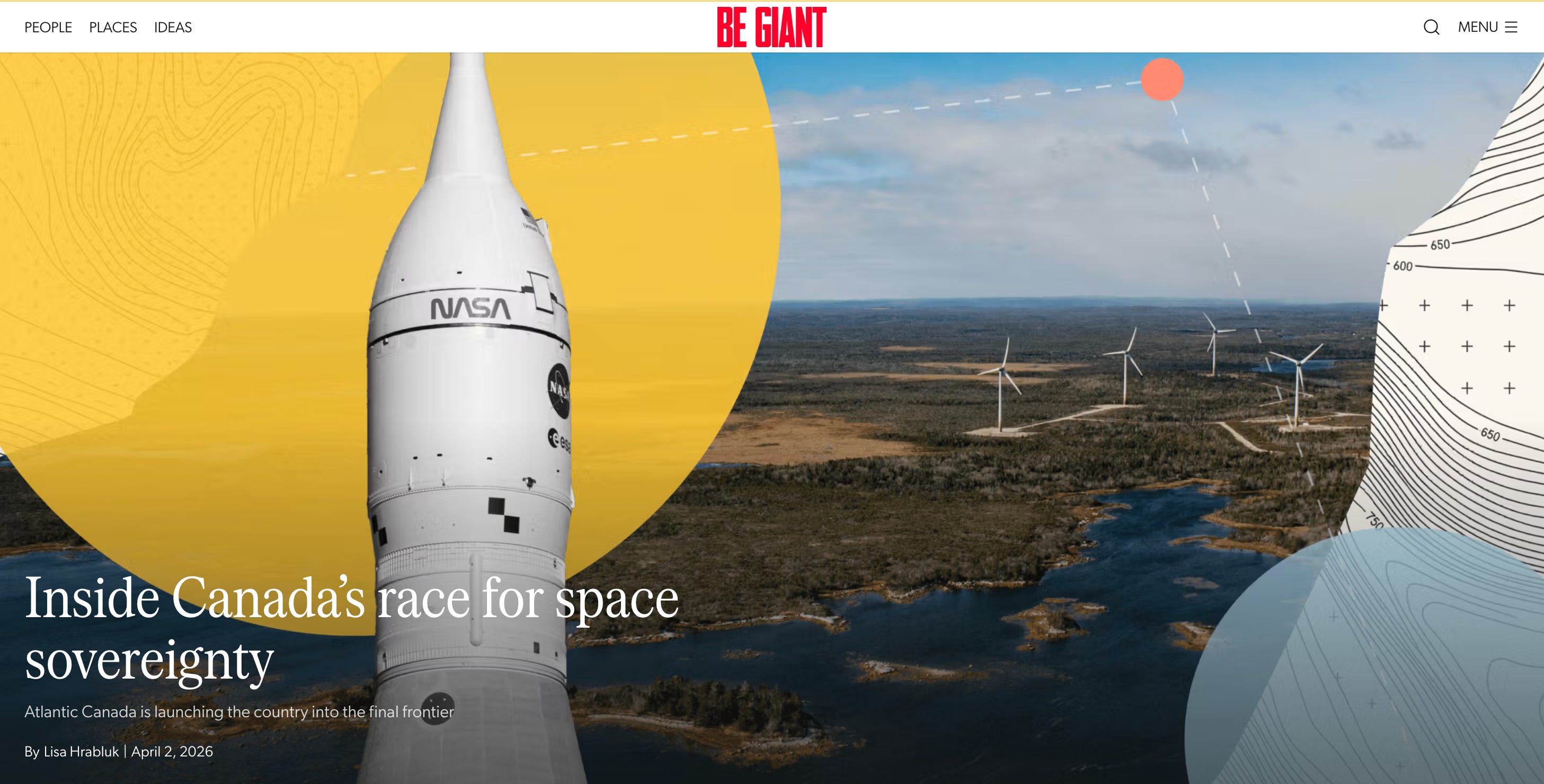
I’m sending all of you away today to explore Be Giant, a new national news organization with a mission to tell the stories of the people, places and ideas that are putting in the work to move Canada forward.
And I’m proud to say my story about Atlantic Canada is the lead.
Led by former Macleans managing editor Alison Uncles and fully funded by the billionaire Weston family, owners of Atlantic Superstore, No Frills and Loblaws, Be Giant is a non-profit newsroom that requires neither advertising nor reader subscriptions.
Its mission, as Alison writes in her opening Editor’s Note, is “to explore the breakthroughs and innovations answering Canada’s greatest challenges, as well as the people relentlessly driving those ideas forward. Our core idea is that the knowledge of what is already being accomplished in Canada can inspire greater confidence to face down our existential challenges.”
Pragmatically optimistic in tone, I am excited to be a part of Be Giant, telling the stories of Atlantic Canadians who are stepping up and out to help this region and country progress.
I’m working on a few other Atlantic Canadian-centred stories, so be sure to sign up for the Be Giant newsletter and bookmark the site.
My story follows the entrepreneurs turning the small coastal communities of Canso, Nova Scotia and St. Lawrence, Newfoundland, into spaceports.
Leading the charge is Stephen Matier, a former NASA contractor who founded Maritime Launch Services and is building Spaceport Nova Scotia – Canada's version of Cape Canaveral – on a stretch of Crown land at the mouth of Chedabucto Bay in Canso, N.S.
Meanwhile, Toronto entrepreneur Rahul Goel is building a second launch site on Newfoundland’s Burin Peninsula, with ambitions to control the full chain from satellite to rocket to spaceport with his company, NordSpace.
For the first time in its history, Canada is building the infrastructure to put its own hardware into orbit, and it is based in Atlantic Canada.
Here’s the start of my story, link at the end to keep reading and visit the full site.
Inside Canada’s race for space sovereignty
Atlantic Canada is launching the country into the final frontier
To understand Canada’s race to space, it helps to look out to sea.
Standing on the wind-whipped wharf in Canso, N.S., nothing but the icy blue-grey ripples of the North Atlantic Ocean extend out from this rocky outcrop on the northeastern tip of mainland Nova Scotia.
This view is why propulsion engineer-turned-entrepreneur Stephen Matier knew his search for a rocket launch site was over when he first visited this small fishing community in 2016.
“When people here say, ‘It’s not the end of the Earth, but you can see it from there,’ that’s exactly why it works,” says Matier, founder and CEO of Maritime Launch Services, which is building Canada’s version of Cape Canaveral on a 136-hectare swath of Crown land at the mouth of Chedabucto Bay. Construction on Spaceport Nova Scotia is underway, with its first commercial orbital launch planned for late 2027, building on two successful suborbital test flights in 2023 and 2025.
“We needed wide-open ocean and the right geography. Canso has both.”
To keep reading, please visit Be Giant, sign up for its newsletter and enjoy!
Stay in the Know.
If this story piqued your interest, please share it. Every share helps spread knowledge about the ins and outs of local affairs and keeps independent reporting strong on Canada’s East Coast.
Support Local Storytelling & Reporting
Sign-up and subscribe to Side Walks and follow our continuing coverage of the issues shaping Atlantic Canada’s future.


